
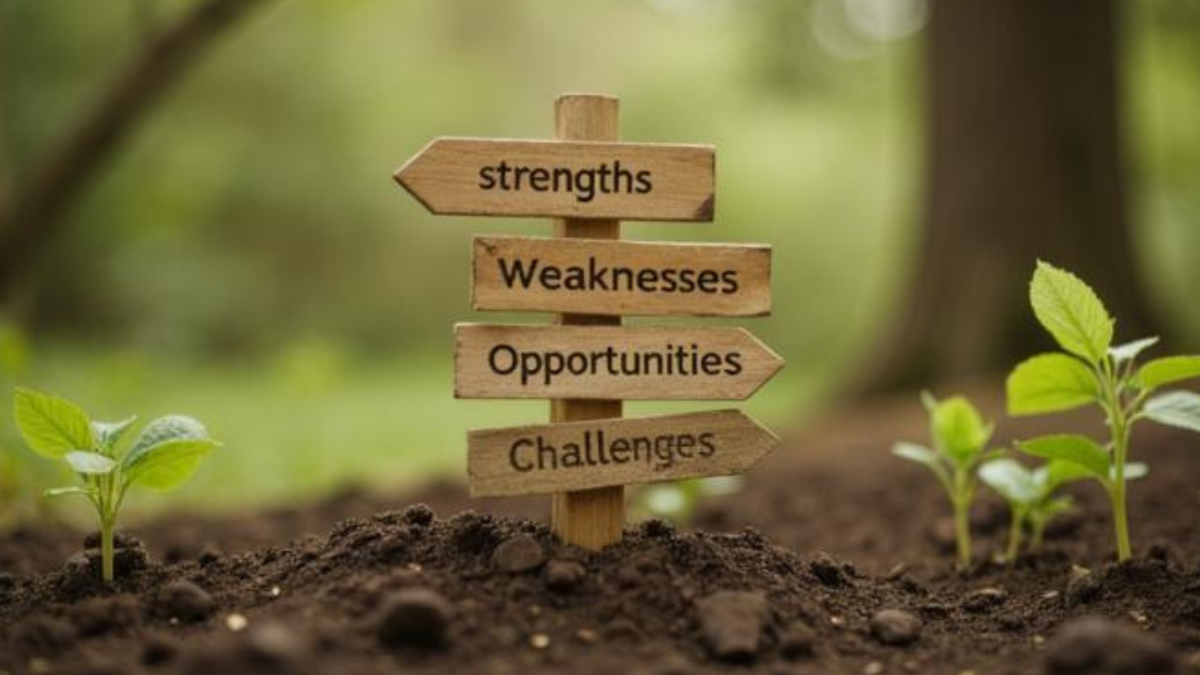
Strengths, Weaknesses, Opportunities and Challenges
SWOC analysis is a practical and reflective framework used to increase self awareness, clarify direction and support structured decision making. Adapted from the traditional SWOT model, SWOC replaces “Threats” with “Challenges”, making it particularly suitable for coaching, leadership development and personal growth contexts.
Many people searching online for SWOT analysis occasionally mistype the term as SWAT analysis. While SWAT analysis is not a recognised strategic framework, it is often used accidentally when people are looking for SWOT or related models such as SWOC. This article clarifies the distinction while introducing the developmental SWOC approach.
The model helps individuals and teams think clearly about their current position before deciding on action. Rather than reacting emotionally or rushing into solutions, SWOC invites thoughtful reflection and conscious choice.
SWOC stands for:
- Strengths
- Weaknesses
- Opportunities
- Challenges
Unlike SWOT analysis, which is widely used in corporate strategy, SWOC is more developmental and forward focused. It aligns well with coaching practice because it encourages awareness, responsibility and growth rather than defensive thinking.
SWOC vs SWOT Analysis
SWOT analysis stands for Strengths, Weaknesses, Opportunities and Threats. It is traditionally used in business strategy to assess competitive position and risk.
SWOC analysis modifies the final element, replacing Threats with Challenges. This shift may appear small, but in coaching and leadership development contexts it significantly changes the psychological framing.
Where SWOT can encourage defensive thinking, SWOC supports ownership, adaptability and constructive action. For individuals who arrive here searching for SWAT analysis, what they are usually seeking is SWOT or a variation such as SWOC that is more appropriate for personal development.
Why Use “Challenges” Instead of “Threats”?
In coaching and leadership development, language matters.
The word “Threats” implies:
- External danger
- Risk of harm
- Defensive positioning
- Lack of control
This framing can unconsciously trigger fear based thinking and reduce confidence.
“Challenges”, by contrast, implies:
- Something to work through
- A test of capability
- Growth potential
- Agency and response
In coaching practice, the aim is to increase responsibility, ownership and constructive action. Referring to external pressures as challenges reinforces the idea that difficulties can be managed, influenced or overcome.
This shift in language supports psychological safety, solution focused thinking, a growth mindset and constructive accountability.
Strengths
Strengths are the internal capabilities, qualities and resources that support success.
- What are your key skills and capabilities?
- What do others consistently recognise as strengths?
- What achievements demonstrate your competence?
- What personal qualities help you perform well?
- What resources or support systems do you already have?
Identifying strengths builds confidence and clarifies what can be leveraged moving forward. Many individuals underestimate their existing assets. Recognising strengths is not about ego but about awareness and effective use of capability.
Weaknesses
Weaknesses are internal limitations or areas for development.
- What skills do you need to improve?
- Where do you lack confidence?
- What feedback have you received about development areas?
- What habits may be holding you back?
- What tasks do you tend to avoid?
The purpose is not self criticism but clarity. Development begins with awareness. When weaknesses are acknowledged constructively, they become areas for intentional growth rather than hidden barriers.
Opportunities
Opportunities are external possibilities that could support progress or growth.
- What trends or changes could benefit you?
- Are there new roles, projects or responsibilities available?
- What networks could you develop further?
- Where could additional training or learning create advantage?
- What unmet needs could you contribute to?
Opportunities expand perspective. They shift thinking from limitation to possibility and encourage proactive action.
Challenges
Challenges are external factors that may create obstacles or test your progress.
- What external pressures are you currently facing?
- What organisational or market factors may affect your plans?
- Where might competition arise?
- What constraints such as time, resources or policy could affect outcomes?
- What risks require preparation?
Framing these as challenges encourages preparation rather than fear. The aim is to anticipate, adapt and respond strategically.
Conclusion
SWOC analysis provides a balanced and practical framework for structured reflection. For those searching for SWOT analysis or even SWAT analysis, SWOC offers a more developmentally aligned alternative for coaching and personal growth contexts.
The aim is not simply to analyse, but to translate insight into purposeful decision making. Awareness creates choice. Choice creates direction. Direction creates meaningful progress.