
Overview
This is perhaps the most personal design in this portfolio. Its purpose: to create a systematic, achievable way of documenting and presenting permaculture designs for someone who is dyslexic and has a deep-seated phobia of formal writing.
Presenting to clients is straightforward — there is a clear goal, a known audience, and verbal communication supported by printed materials works well. But creating general documentation for unknown readers has been a major block. A single paragraph can take hours to write, and the result still feels unsatisfactory. With over 60 designs completed, the task of documenting them all felt overwhelming.
This design asked: what if the documentation challenge itself was treated as a permaculture design problem?
Methodology
Given the complexity and personal nature of this design — and because the challenge was not land-based — the choice was between SADIM and OBREDIM. SADIM was chosen for its robust survey and analysis phases, which were needed to honestly examine the strengths and weaknesses involved.
Working Through the Design
-
1
Survey — Mapping Strengths & Weaknesses
The survey mapped the designer's strengths and weaknesses honestly and in detail. A core strength: the ability to understand complex patterns and simplify them. The most significant weakness: a complete mental block when required to write formally for an unknown audience.
The survey also identified existing assets — a large body of design documentation already exists, just in non-standard formats: hand-drawn mind maps, Xmind digital maps, Sketchup models, slide presentations, and verbal explanations.
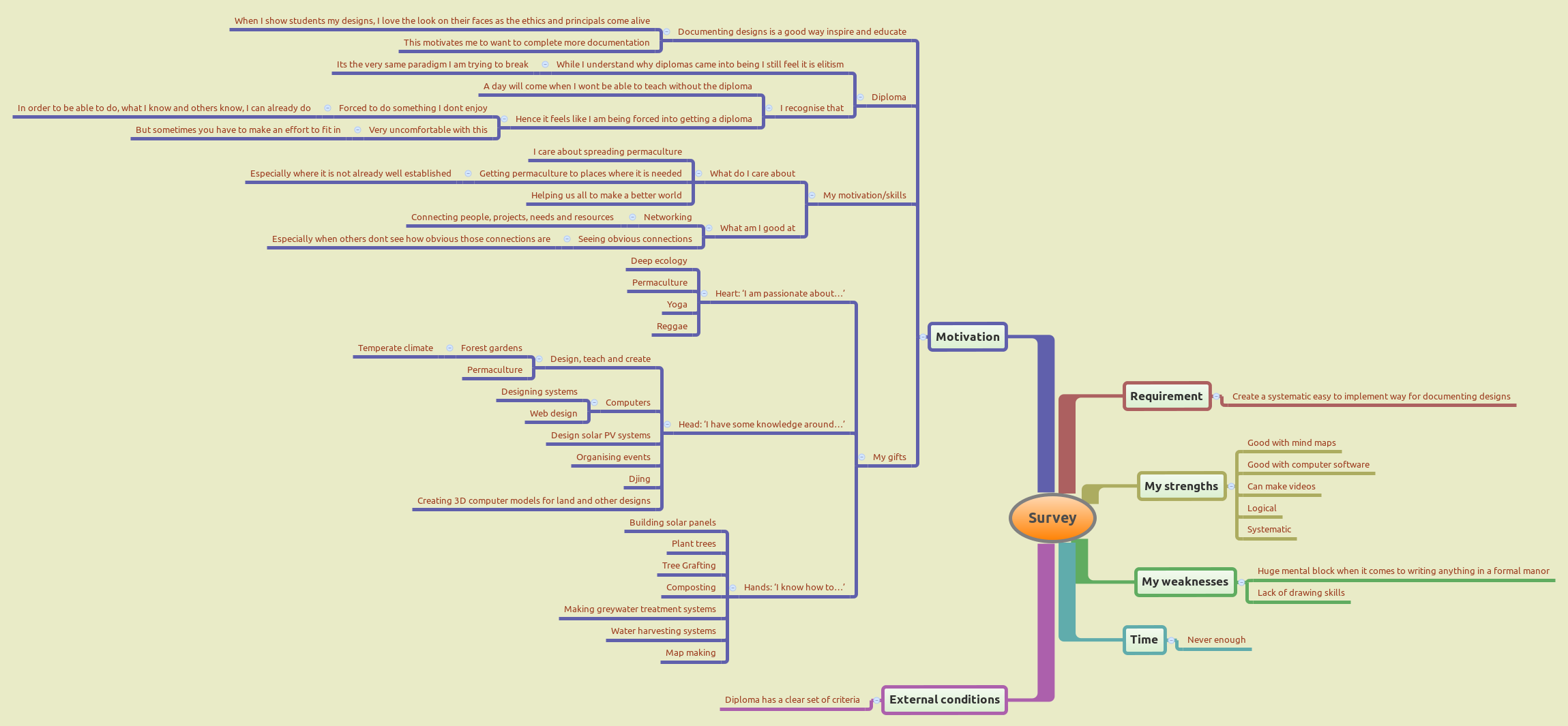
Survey mind map — strengths and weaknesses mapped honestly -
2
Analyse — Implications & Opportunities
Each point from the survey was examined for its implications. Several unexpected opportunities emerged: the existing documentation, while non-standard, is actually rich and detailed. The challenge is not creating documentation from scratch — it is finding a way to present existing material accessibly.
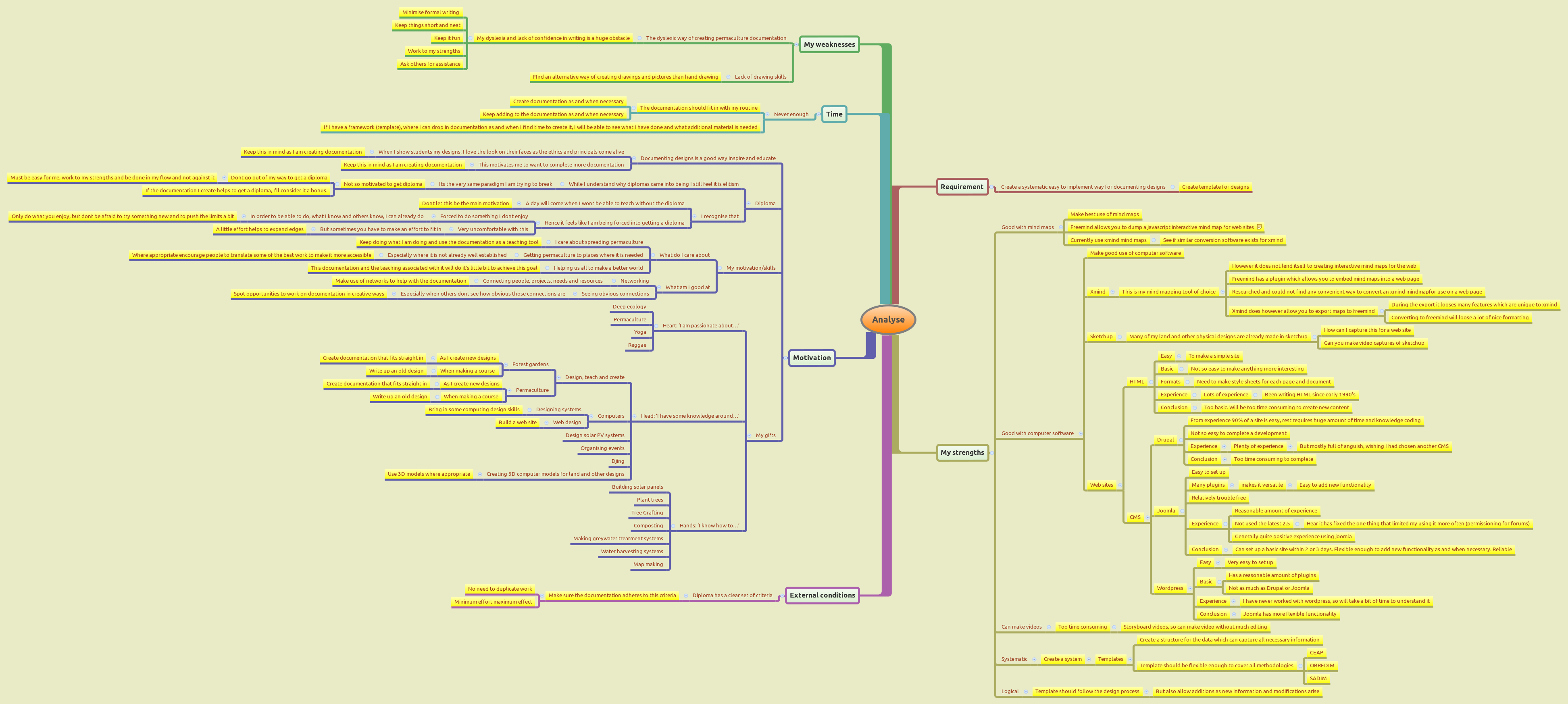
Analysis mind map — implications explored 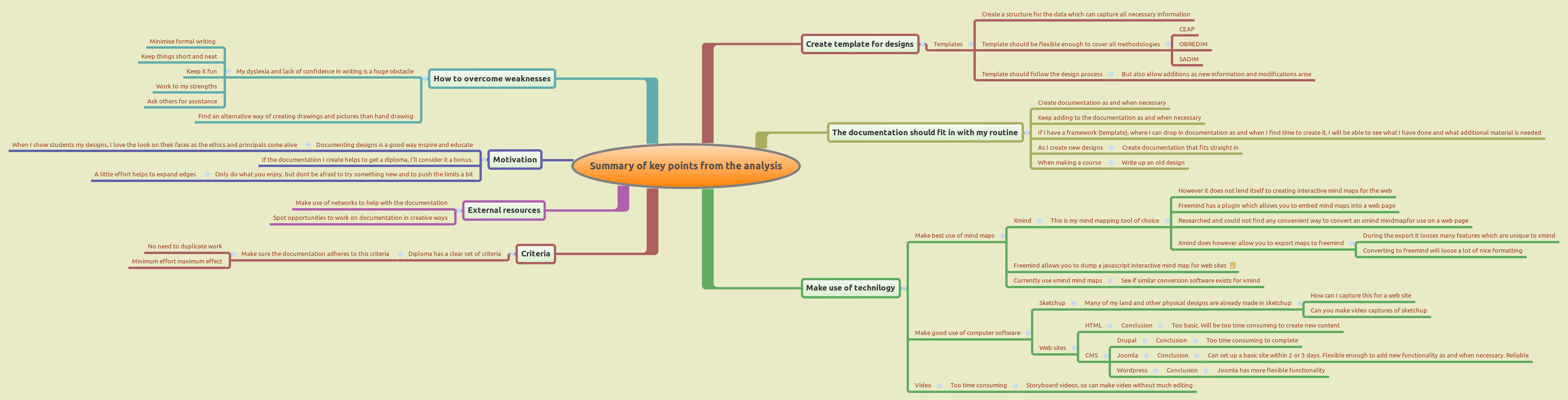
Analysis summary — key points distilled -
3
Design — A Documentation System That Works
The design phase worked through the permaculture principles to develop an approach to documentation that plays to strengths and works around weaknesses. The key insight: don't try to write in a way that is unnatural. Instead, use the visual and structural formats that come naturally (mind maps, models, images) and organise them within a minimal written framework.
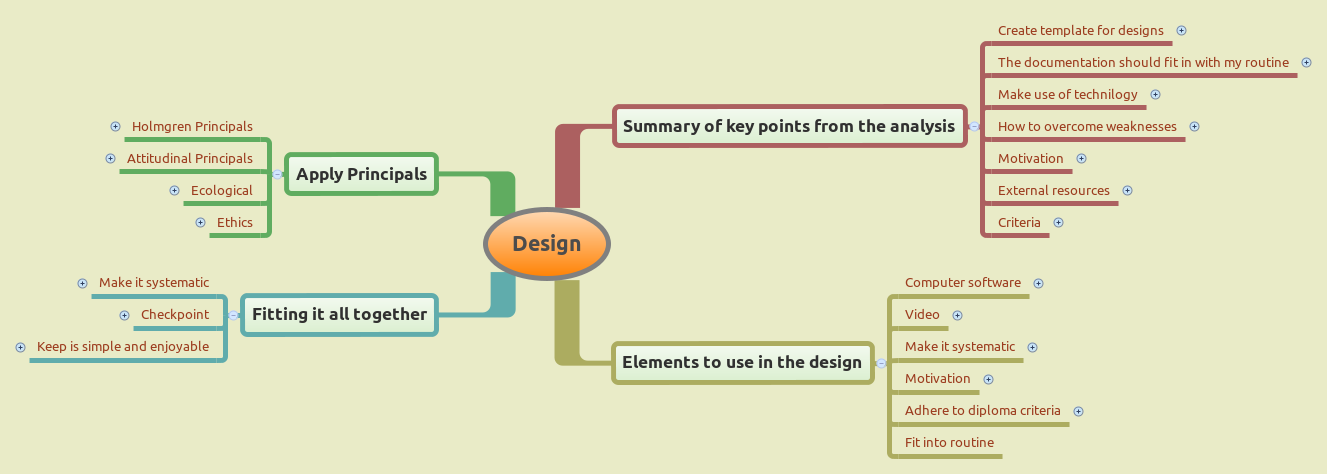
Design overview 
Elements to use in the documentation system 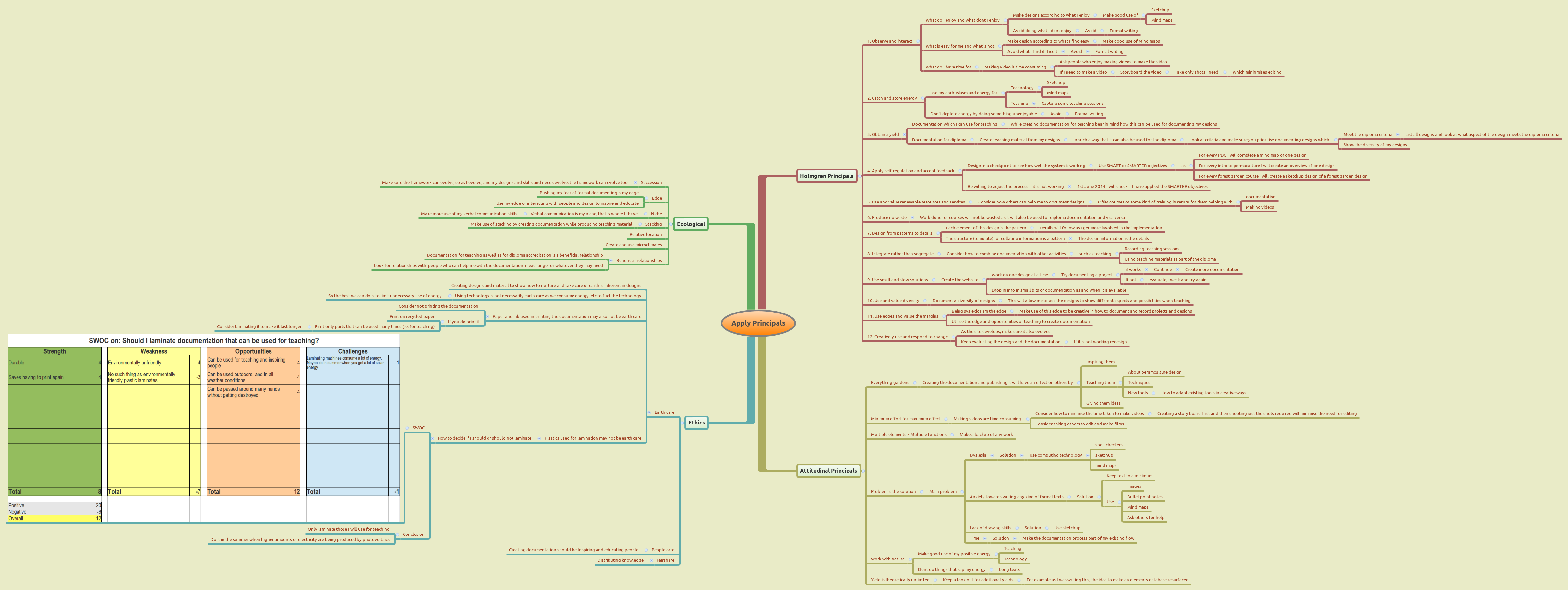
Principles applied to the documentation design 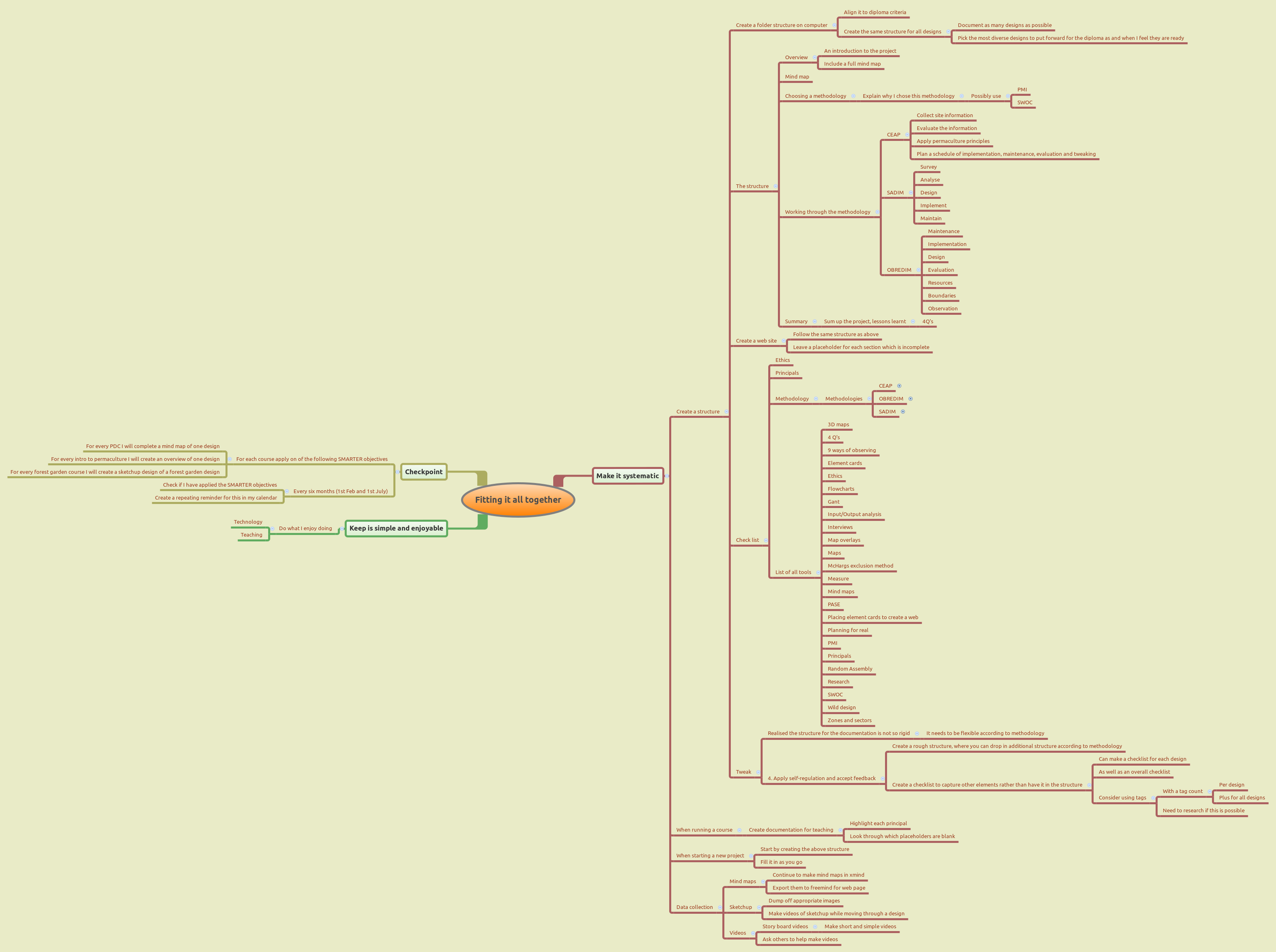
Fitting it all together — the final documentation framework -
4
Implement & Manage
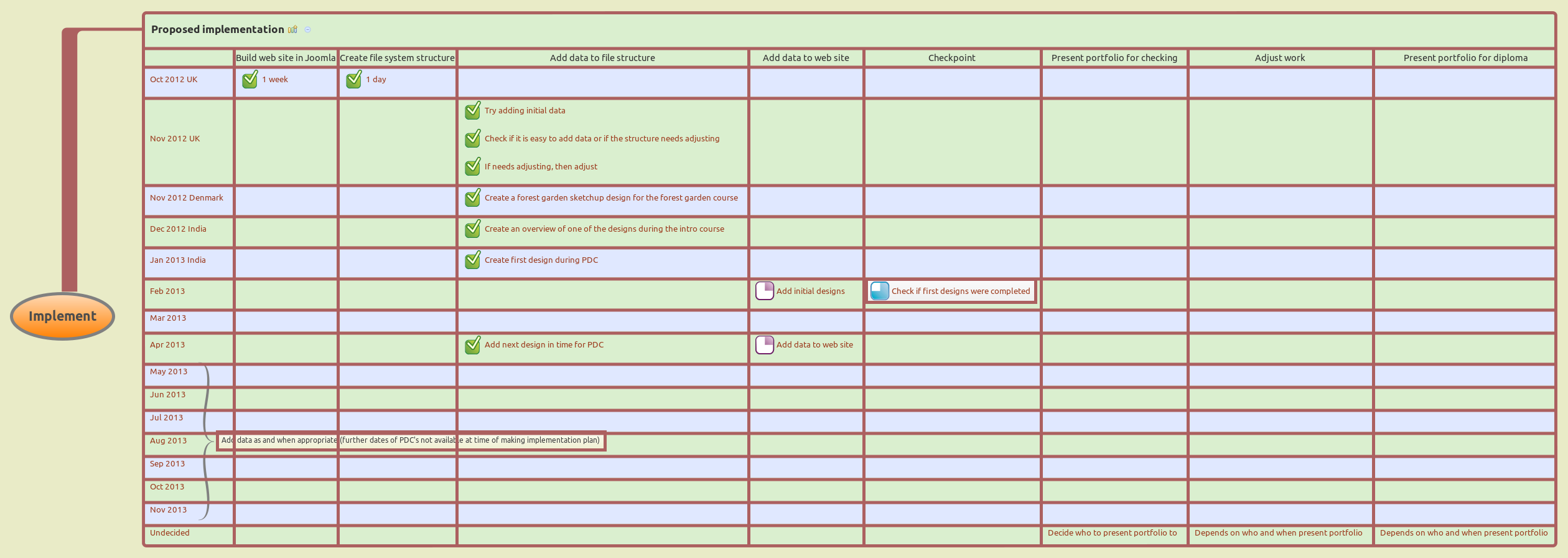
Implementation plan 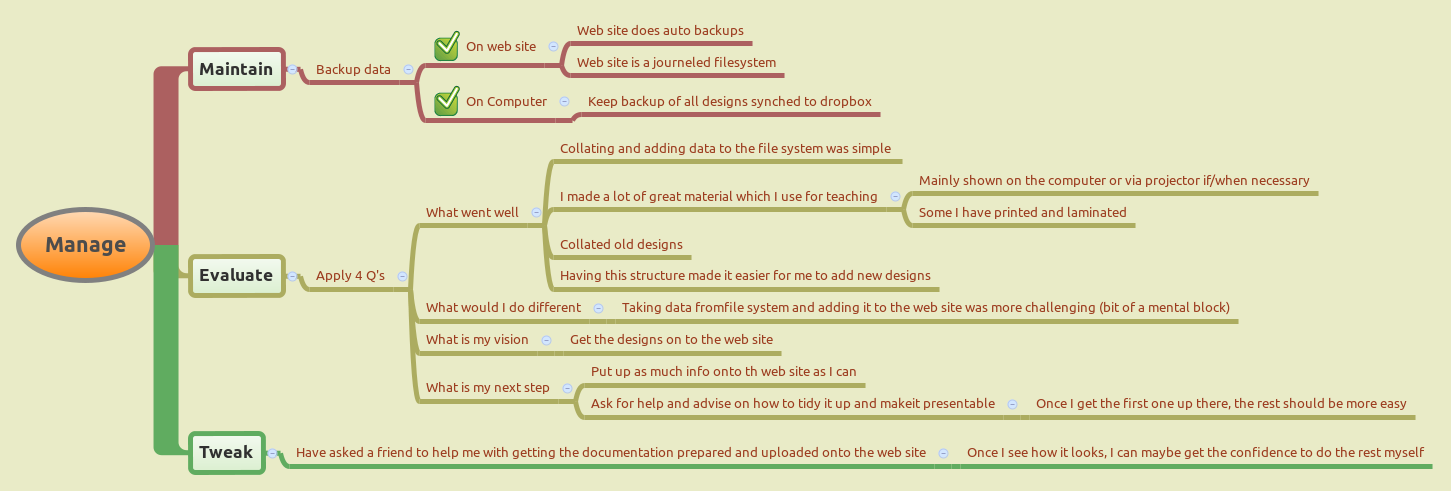
Management and ongoing review plan 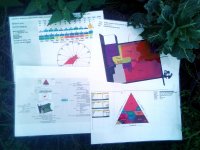
Working session 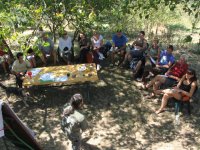
The documentation process in action 
Output materials
Reflections & Outcomes
The fact that this design portfolio exists — and that you are reading it — is the most direct measure of this design's success. The approach that emerged: use visual formats as the primary medium; provide brief written contexts rather than full written explanations; let the images and mind maps carry the substance; and choose the most natural format for each element rather than forcing everything into one style.