
Overview
Like many suburban front gardens, this one was paved over to accommodate cars — back when the household owned two or more vehicles. Now that nobody in the household owns a car, a flat expanse of concrete serves no purpose except to make the street feel colder and less alive.
The design aimed to restore colour, food production and community to this space. In the 1970s, residents on this street knew almost everyone on the road. That sense of community has largely disappeared. The front garden — facing the street, accessible to passers-by — is a rare opportunity to rebuild it, one herb label at a time.
Methodology
Having found OBREDIM challenging in previous designs, I chose it here deliberately to practice further and deepen my understanding of its particular strengths. Using a methodology on a real project — even if it is not the most natural fit — is the most effective way to truly learn it.
Working Through the Design
-
1
Observation — Reading the Site
Key observations: the site is currently lifeless — paving, no plants, no habitat. It receives only afternoon and evening sun (east-facing aspect, shaded in the morning). It is exposed to wind. This sun pattern significantly constrains plant selection.
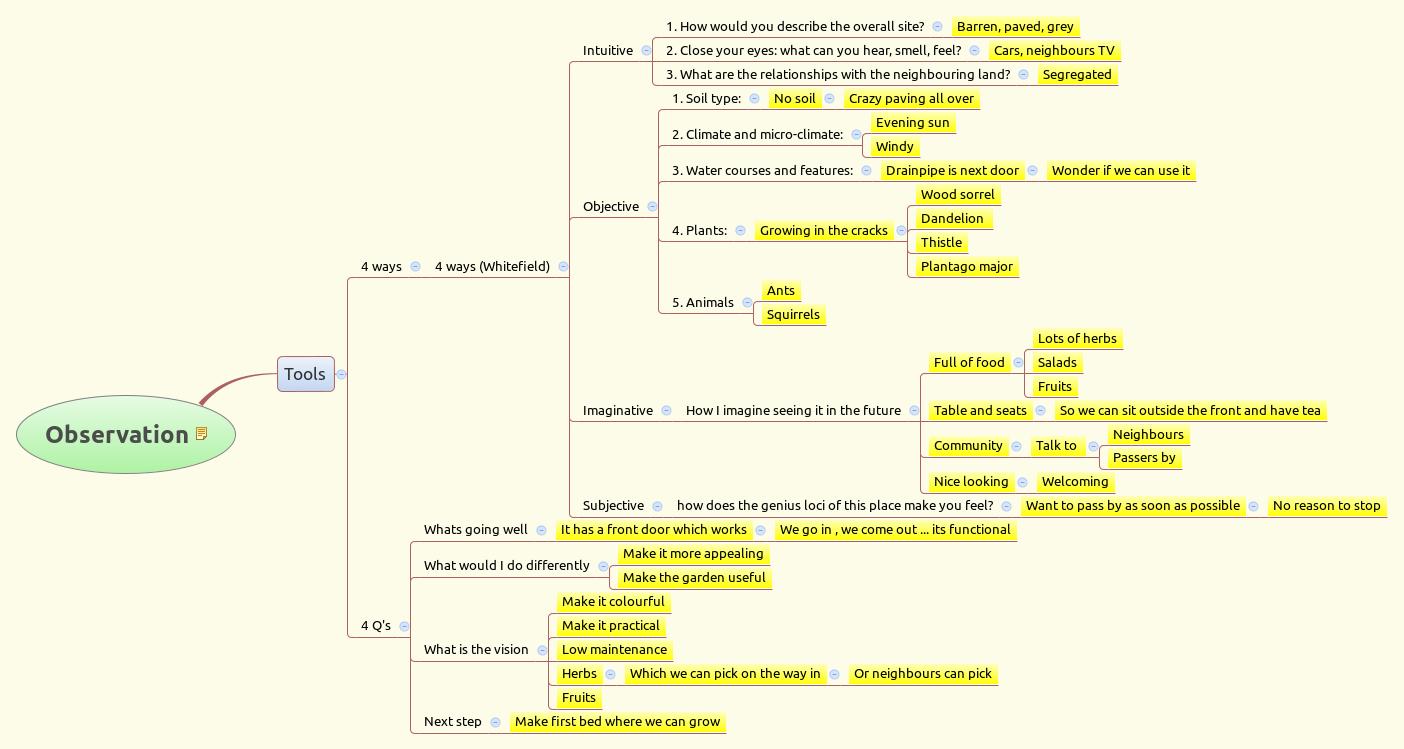
Observation mind map 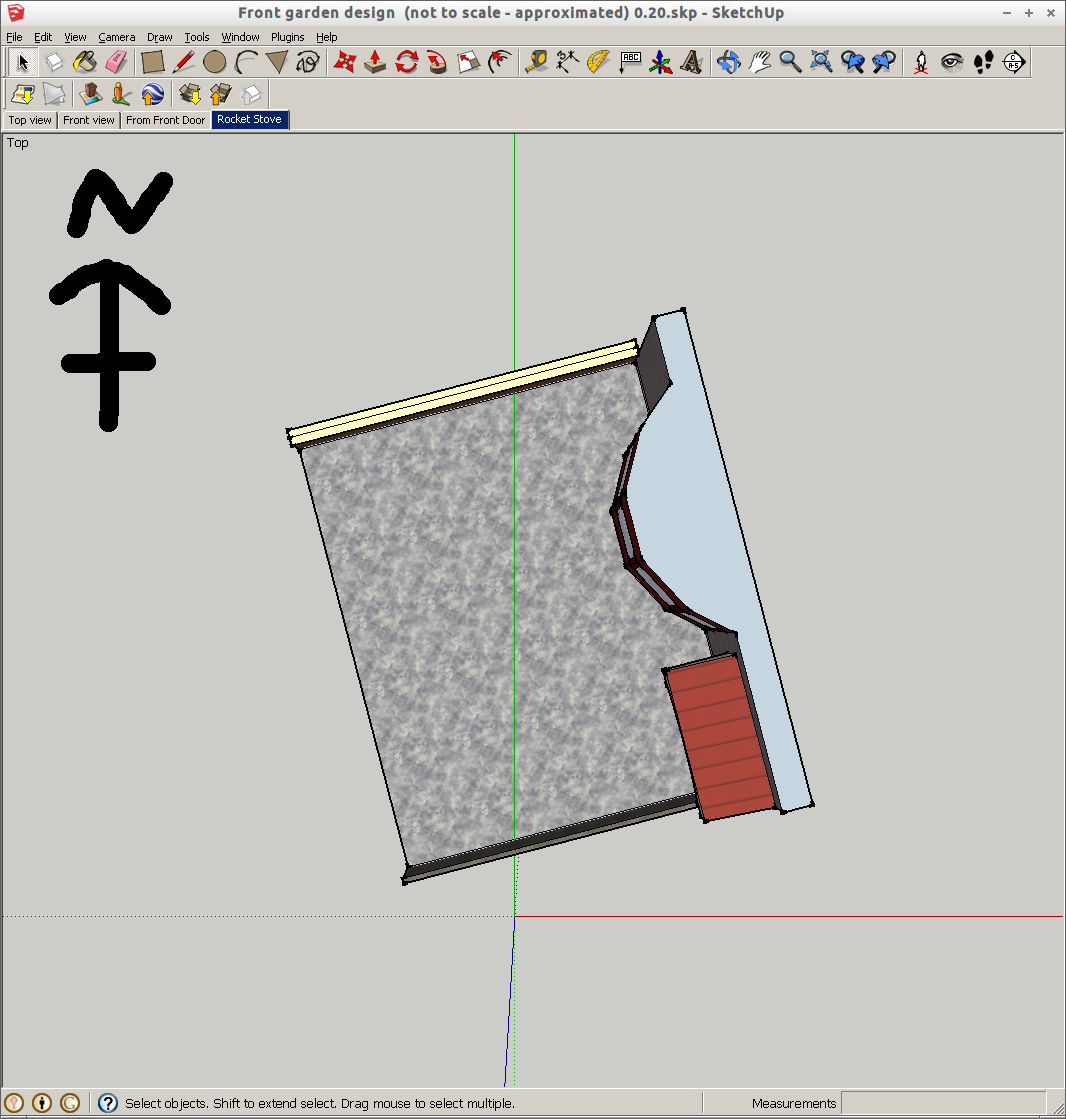
Basemap showing true north orientation -
2
Boundaries & Resources
The most interesting boundary is the front edge to the pavement — the interface with the neighbourhood and passing community. Walls on two sides offer potential for climbing plants. The key resource challenge is aesthetic: the design must look good, as it is highly visible.
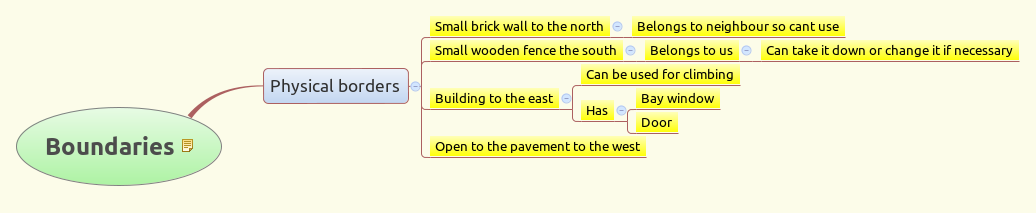
Boundaries analysis 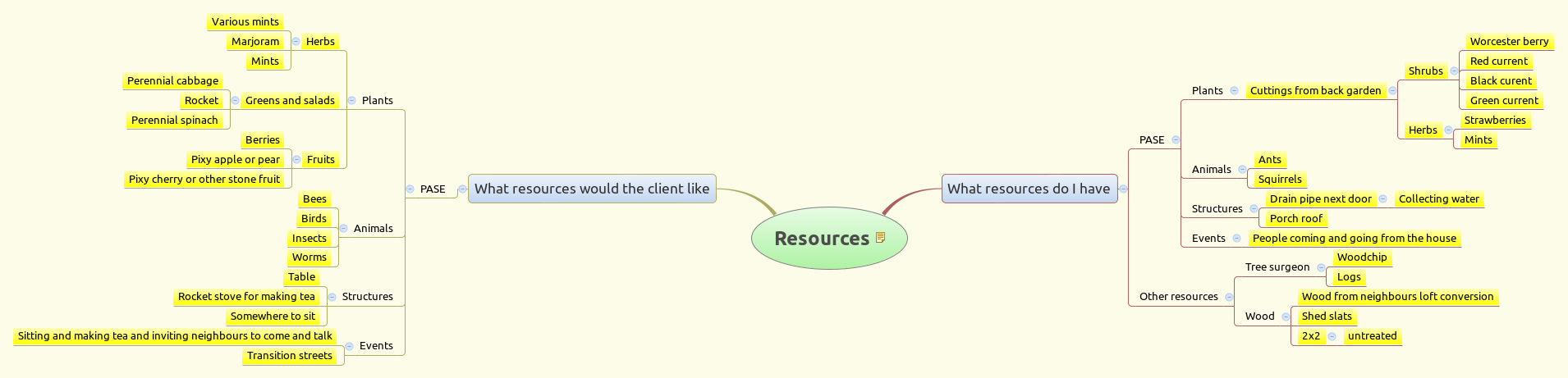
Resources analysis -
3
Evaluation — Wind, Sun & Zone Analysis
Evaluation confirmed that some originally considered plants would not thrive here and had to be eliminated. A nutrient strategy for the new beds also emerged as a priority. Monthly wind data showed consistent exposure, making shelter a key design consideration.
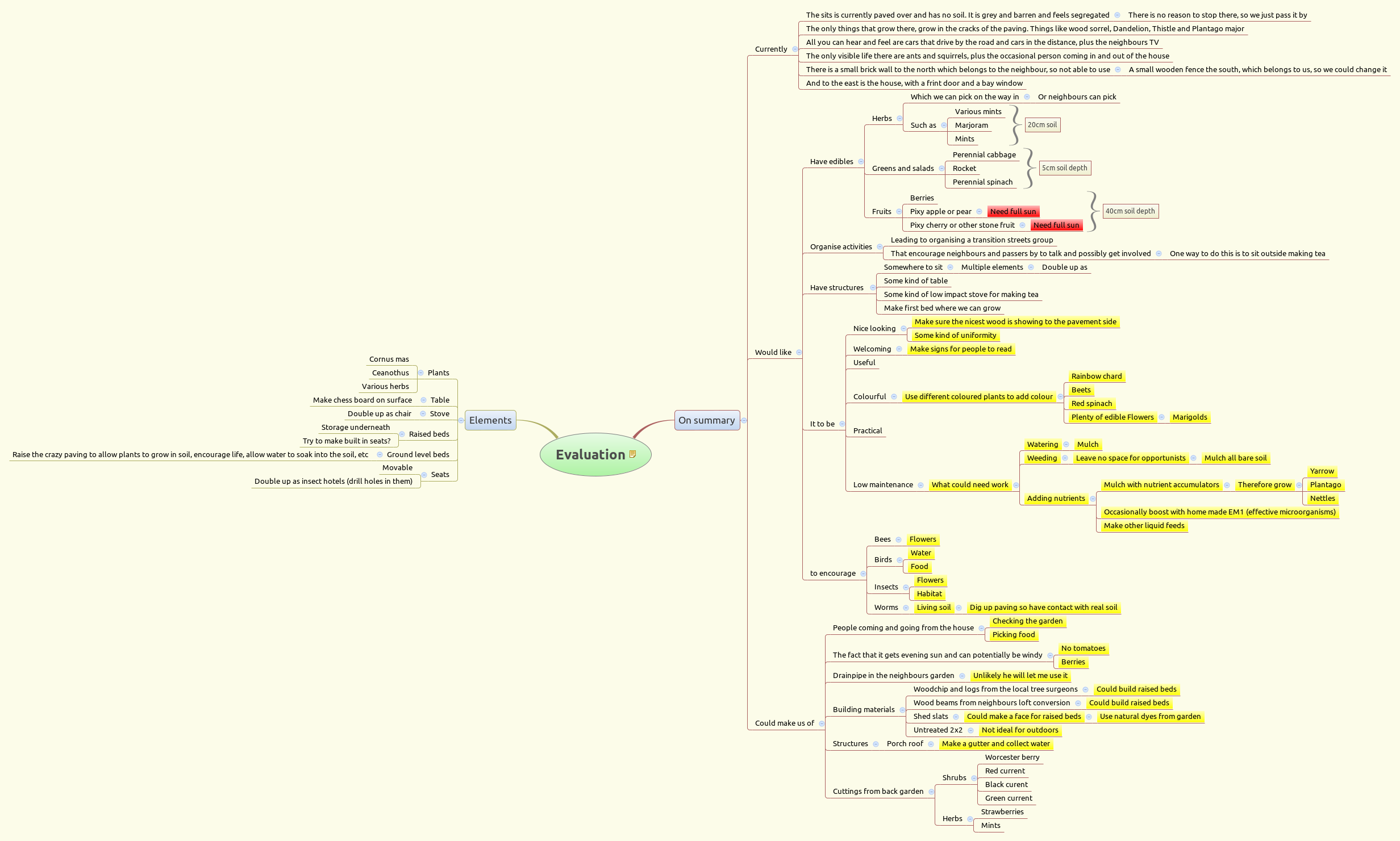
Evaluation mind map Monthly Wind Statistics
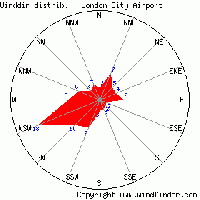
Annual summary 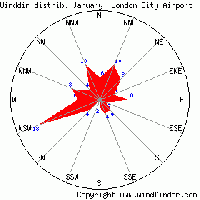
January 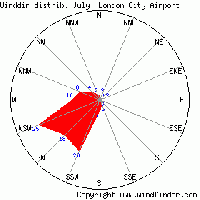
July 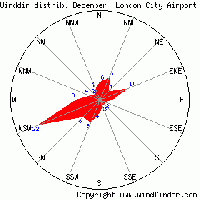
December Zone Analysis
The small site accommodates only zones 1 and 2. Zone 1 — closest to the front door — receives the highest-frequency attention and gets the most visited plants (herbs for daily use, the ceanothus soap bush).
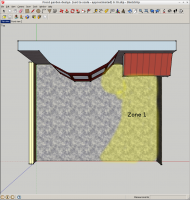
Zone 1 — immediate door area 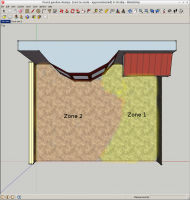
Zones 1 & 2 together -
4
Design — Layout & Elements
The design places a Cornus mas (Cornelian cherry — a taller tree) at the back to avoid blocking light to the rest of the garden. Ceanothus is placed closest to the front door, picked daily as a natural soap plant. A central seating area with a table sits behind the raised bed. The raised bed will contain labelled herbs with an invitation for passers-by to take small amounts.
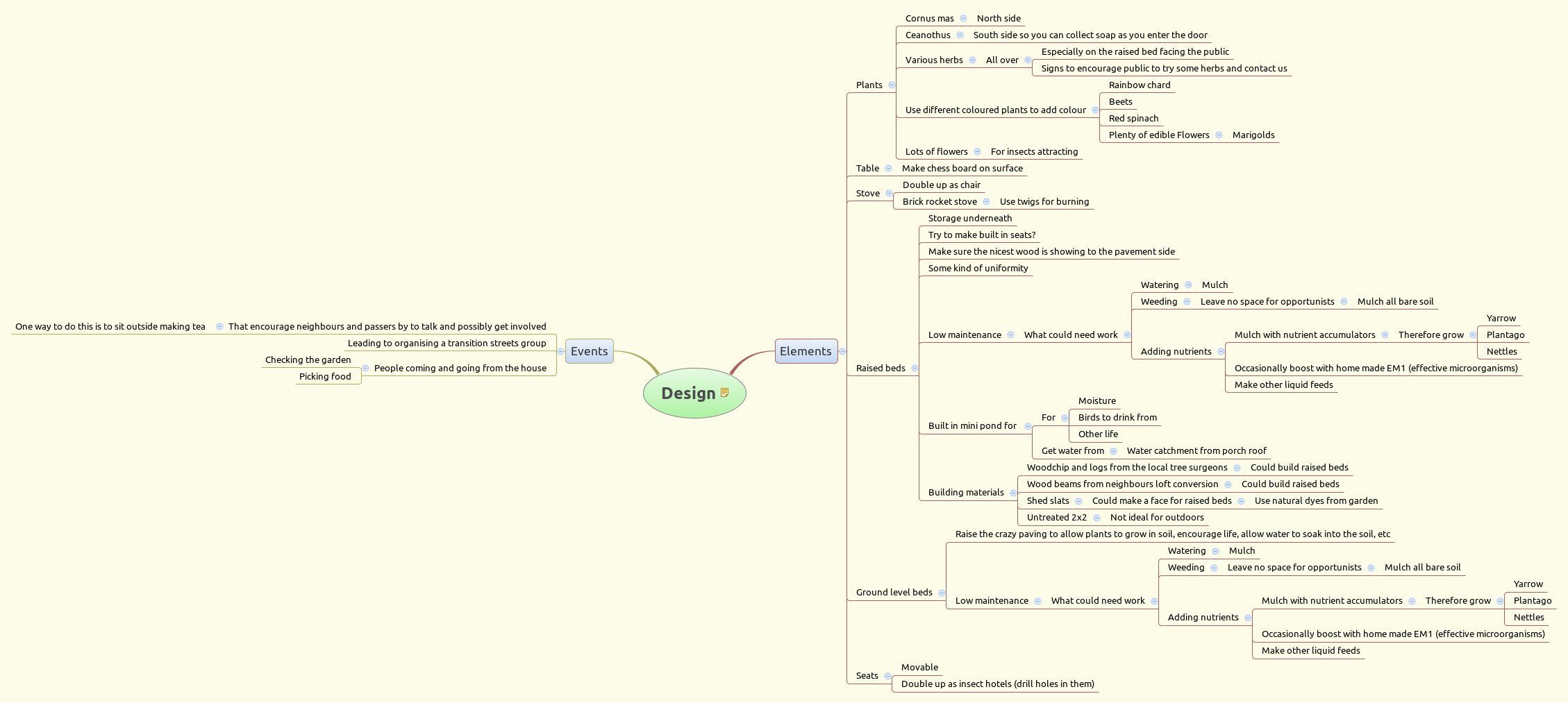
Design mind map 3D Design Views
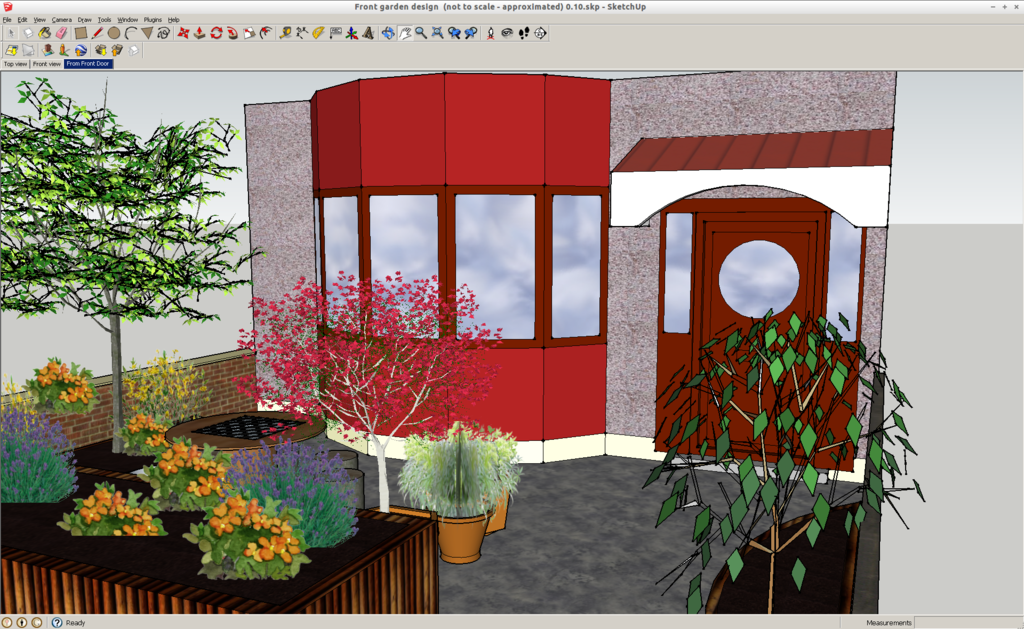
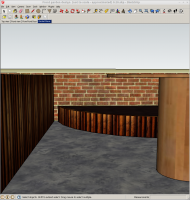
View from the pavement 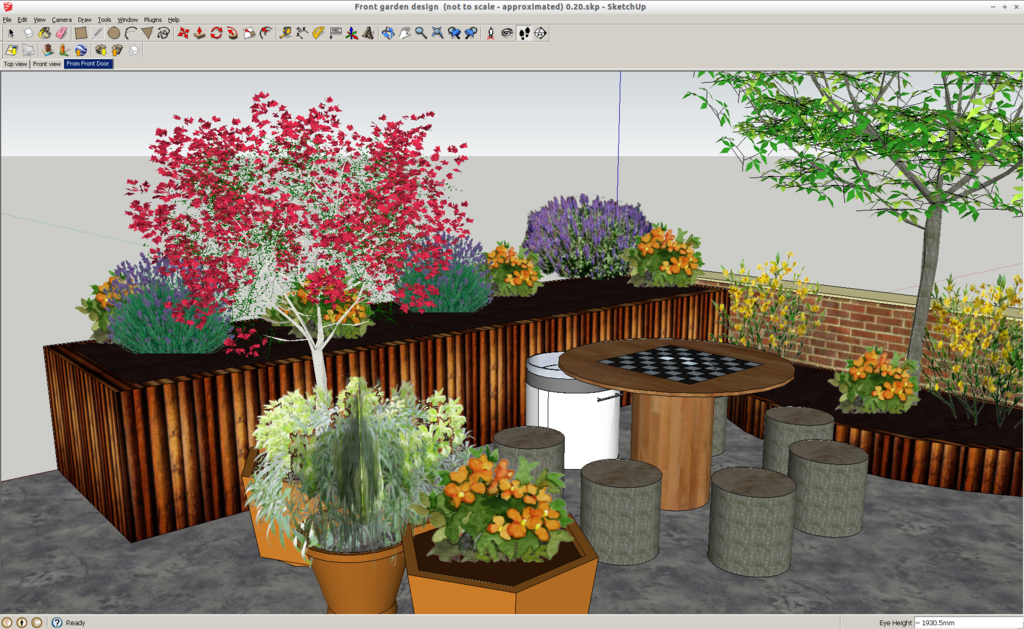
View from the front door Top-Down Views — Design Build-Up
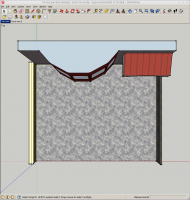
Base 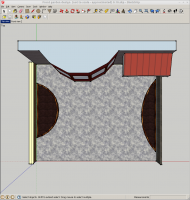
New ground beds 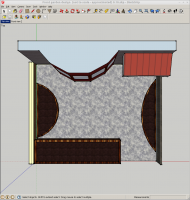
Raised bed added 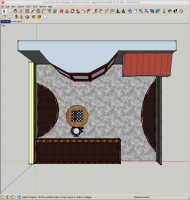
Rocket stove position The Rocket Stove
A small rocket stove was designed for the space — slightly hidden to avoid attracting too much attention from casual passers-by.
Stove design 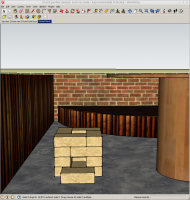
Brick layout 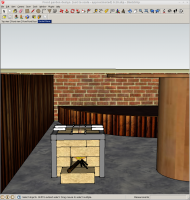
Fire chamber -
5
Implementation Plan
Planned for summer 2014, in sequence: lift some paving and create ground-level beds → raised bed → guttering and water catchment (connecting two barrels, one each side, filled simultaneously via a low connection) → seating and table from recycled materials → rocket stove.
Note on water design: a gutter on the porch roof will fill the first barrel; this connects near the base to a second barrel on the north side, so both fill simultaneously — a simple gravity-fed dual-barrel system requiring no pumping.
🌿 Water Catchment PrincipleCatching rain from the porch roof and storing it in two linked barrels demonstrates catch and store energy — one of permaculture's core principles. No plumbing is required; gravity does the work.
Reflections & Outcomes
Transforming this grey, lifeless front garden into a productive, shared community space has been a long-held intention. The design went through several iterations and will likely continue to evolve before implementation. The use of OBREDIM for a second time was valuable — its structured observational opening revealed wind exposure and the half-day sun pattern more systematically than a less formal approach might have.