
Overview
The existing shed at Talbot Gardens permaculture garden had reached the end of its life — completely rotten inside, with roof, walls and floor all needing replacement. It was so structurally unsound that it had been kept standing only by a broken cherry tree branch propping it up from outside.
Rather than simply replacing like for like, this design asked: what else could this structure become? The garden had always wanted a greenhouse but also needed a shed. Could we design one structure that serves both purposes — and more?
Methodology
A relatively simple, well-defined design brief — replacing and upgrading an existing structure — suited the lighter CEAP methodology well. SADIM would have been unnecessarily elaborate here.
Working Through the Design
-
1
Collect — Brief & Site Information
I interviewed my parents (the garden owners) about their needs and layered in my own requirements. The brief was distilled into must-haves and would-also-likes. Security was a special consideration: the shed had been broken into multiple times, so valuable items would not be stored there regardless of design.
Must have: Storage space; Greenhouse. Would also like: Teaching space; Outdoor cooking; Seating area.
The shed sits at the back of the garden beneath the cherry tree — its position determines orientation, light availability, and interaction with the tree.
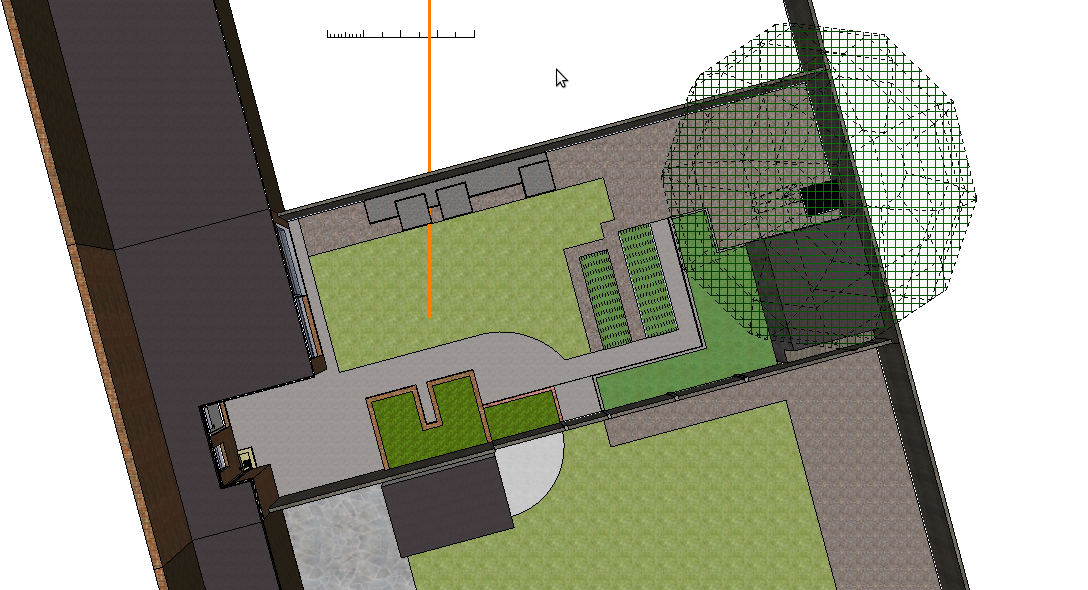
Shed location on basemap 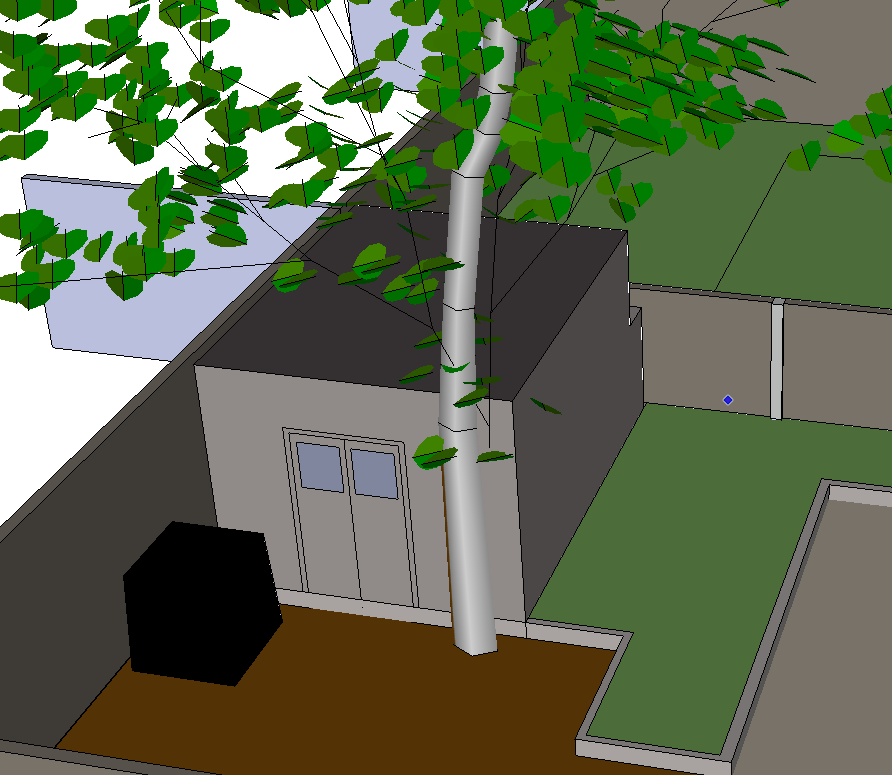
Original shed — note the tree propping it up 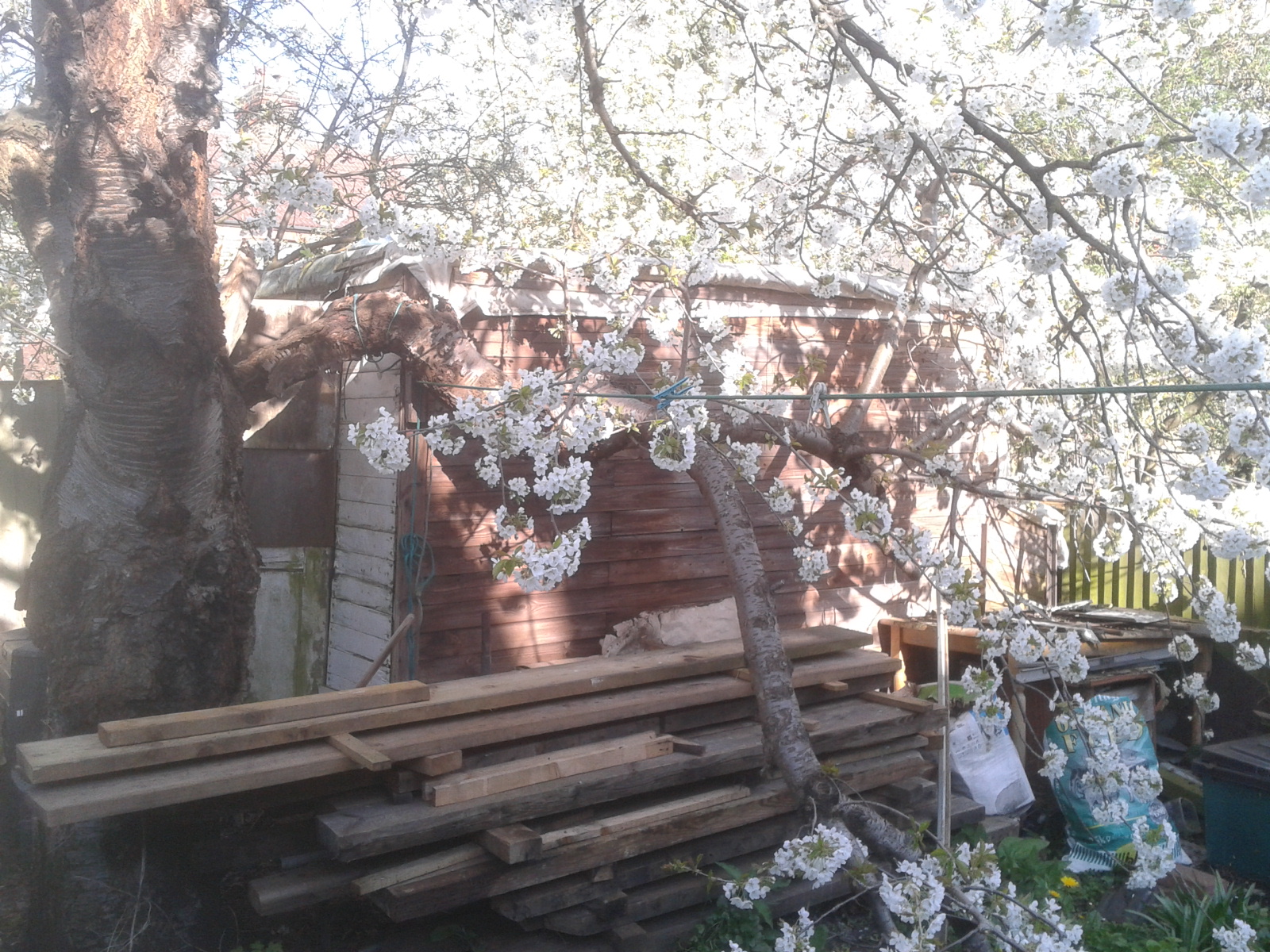
The original shed in reality -
2
Evaluate — Elements & Ethics Analysis
An input/output elements analysis considered what each intended element needs and produces. The permaculture ethics were applied at every point to guide decisions — particularly around material choices (recycled where possible) and energy use.
A design web analysis identified new elements to add: Solar PV, expanded garden connection, a composting integration, and maximising solar gain.
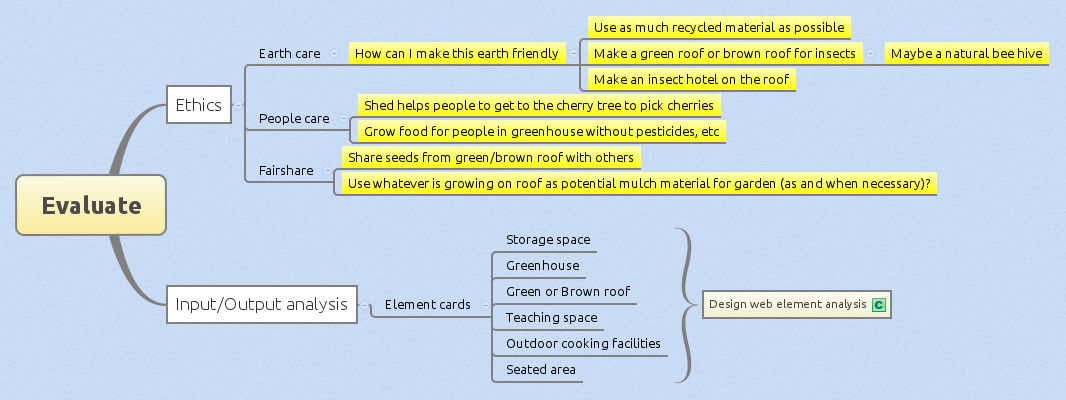
Ethics and elements evaluation mind map 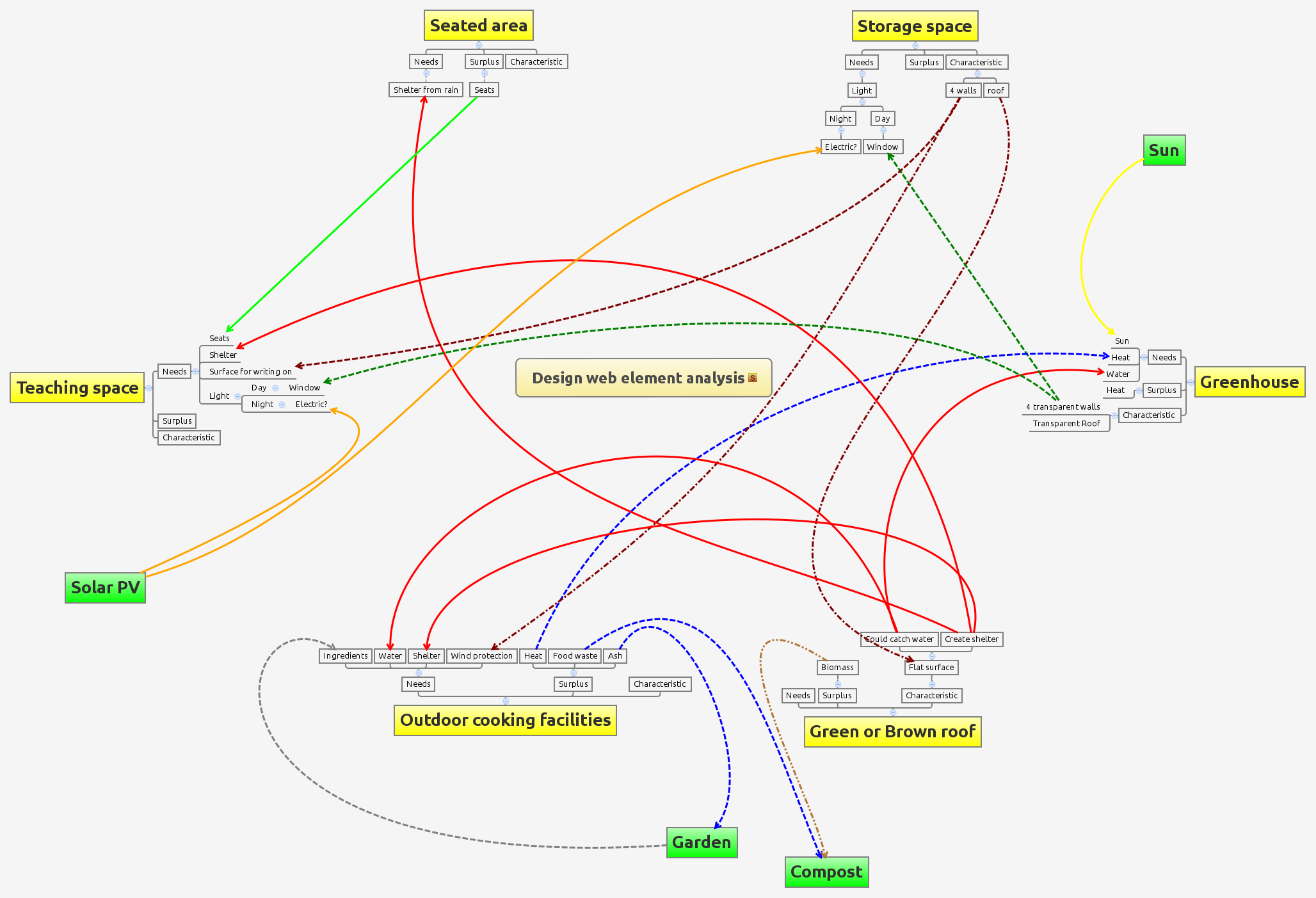
Design web — needs and surpluses of each element -
3
Apply — Principles & Final Design
Permaculture principles were applied to synthesise the evaluation into a coherent design. The final structure combines: main shed (storage), attached greenhouse with water reservoir in its foundation wall, seating shelter, green/brown roof, insect hotel, beehive space, rocket stove and heated bench, and solar PV.
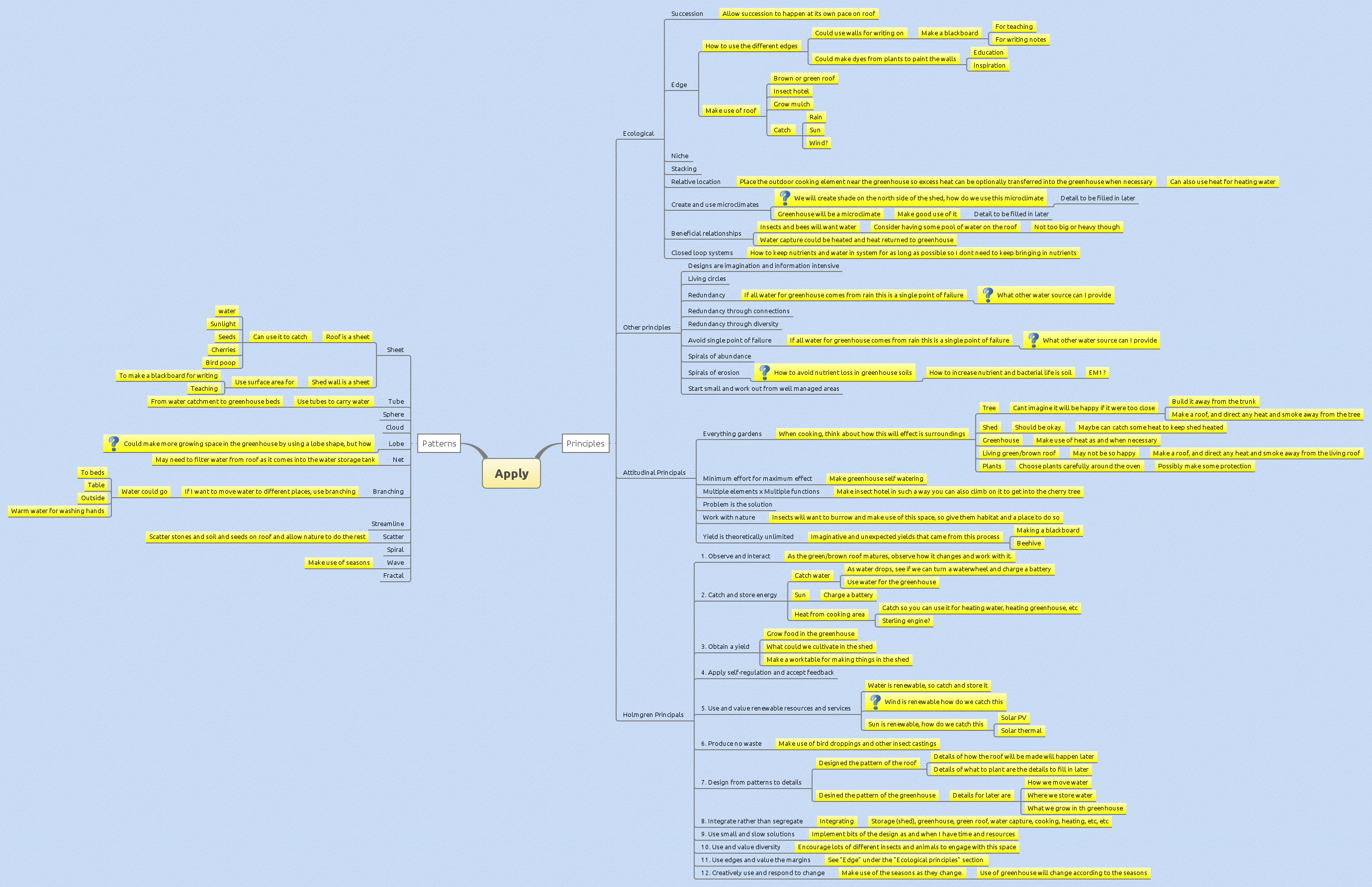
Applying permaculture principles 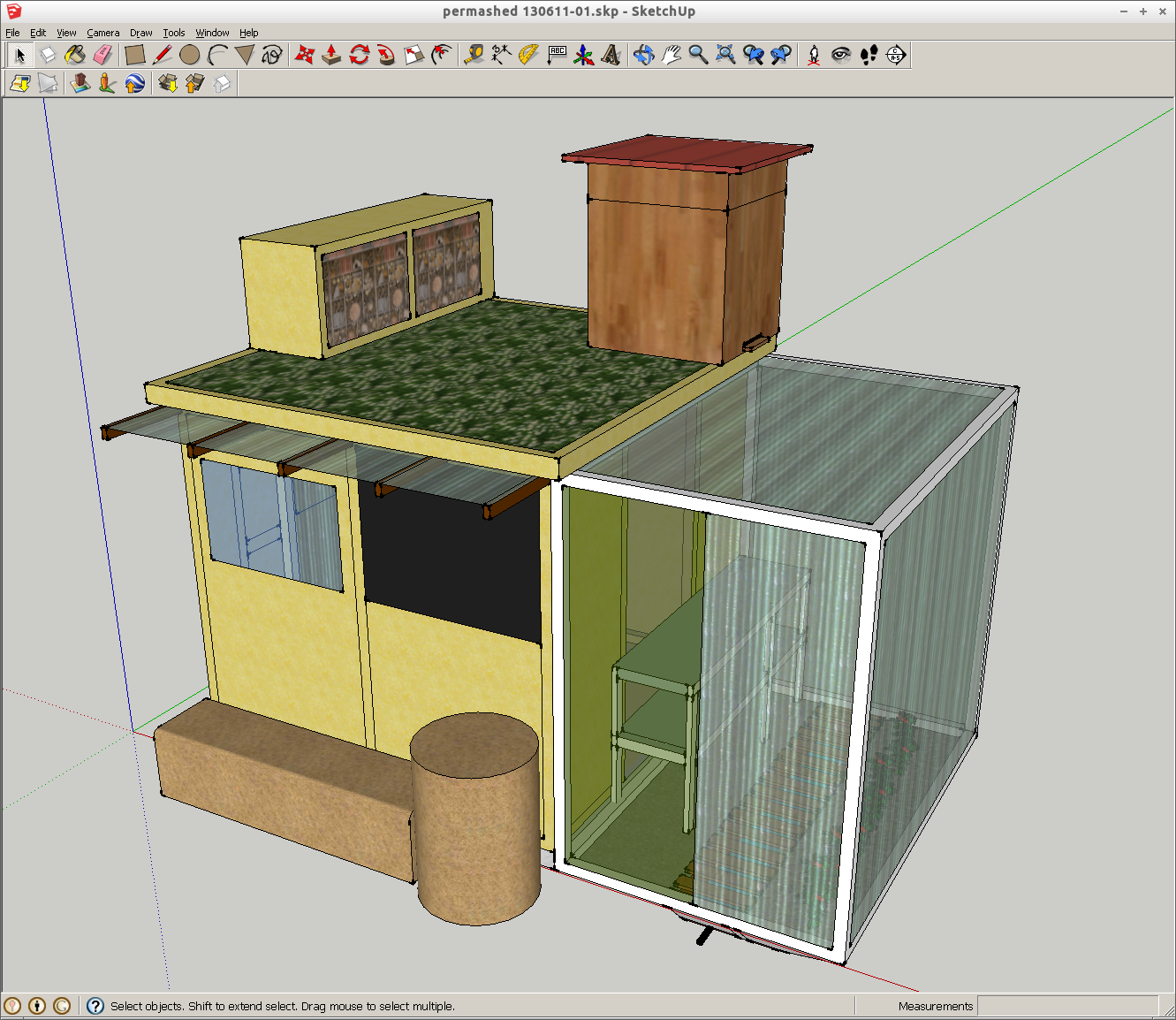
Final design — complete structure -
4
Plan & Build — Expected vs. Actual
Because the build relied on recycled materials and volunteer help, a rigid plan was never realistic. The build sequence below shows the intended order; reality required flexibility and adaptation.
1 — Foundation 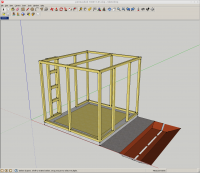
2 — Shed frame 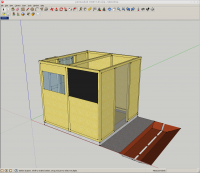
3 — Walls 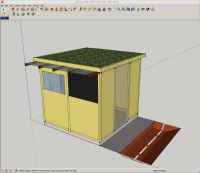
4 — Green/brown roof 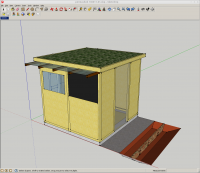
5 — Water reservoir brick wall 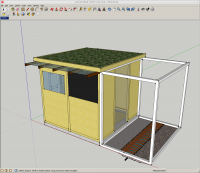
6 — Greenhouse frame 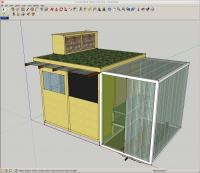
7 — Insect hotel 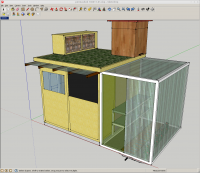
8 — Natural beehive 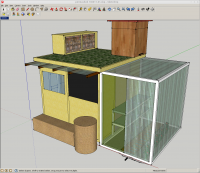
9 — Rocket stove & heated bench Demolition
Demolition took one day; cleanup took a week. The rotten wood went directly into a new hugel bed — waste from one system becoming a resource for another.
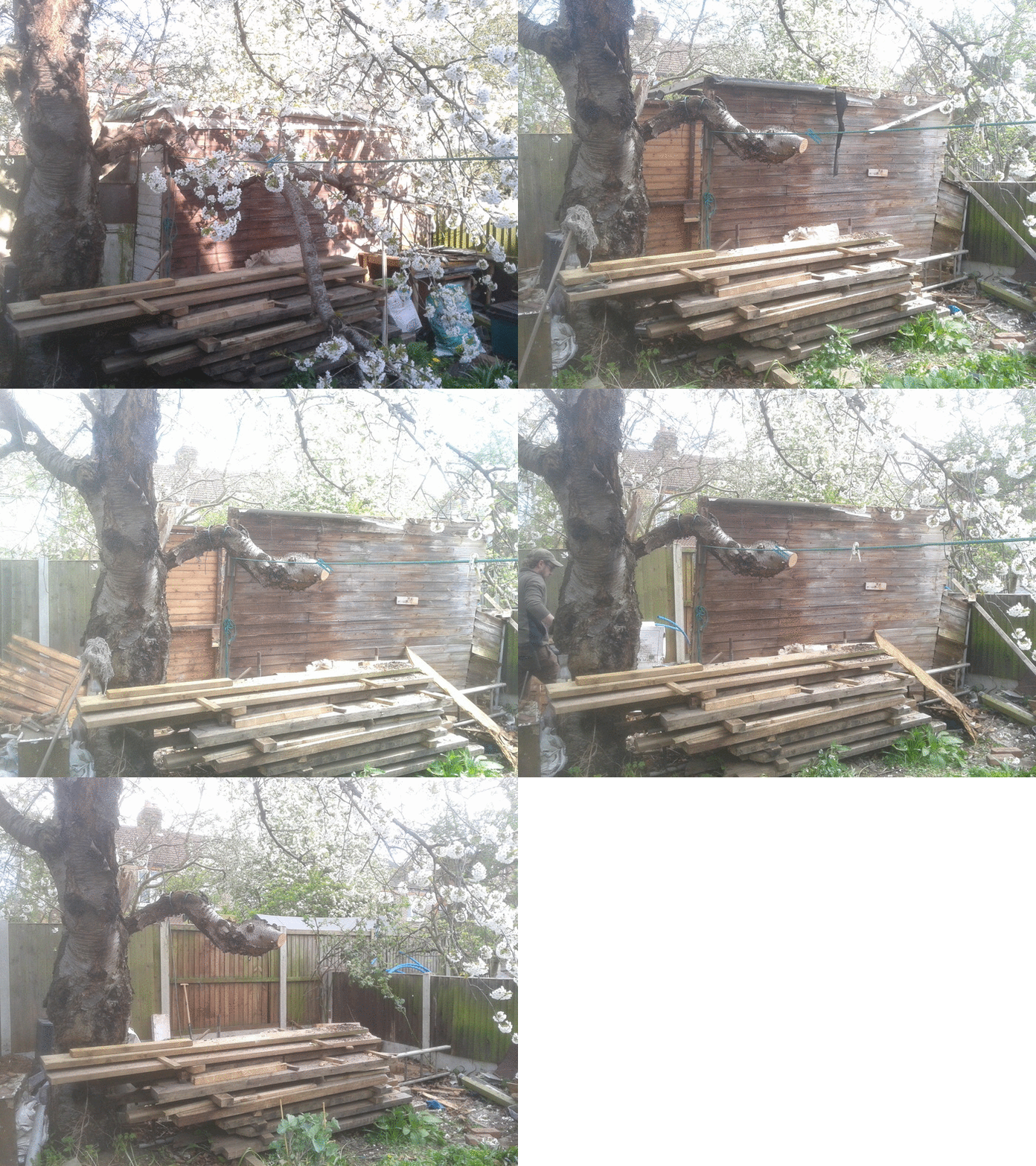
Time-lapse of the old shed being dismantled The Build
Three build days have been completed so far. The structure has a roof, three walls and a door. Most materials were sourced from skips or recycled; the only new purchases were marine ply and pond liner for the roof.
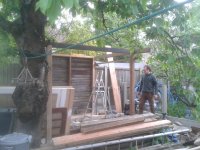
Frame and back wall going up 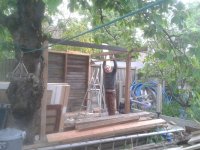
Testing the frame 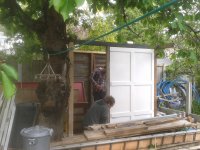
Walls going in 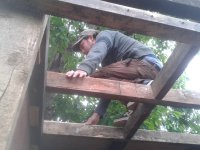
Roof installed
Reflections & Outcomes
The design process was creative and enjoyable — the challenge of combining multiple functions in a single structure produced an unexpectedly rich brief. The beehive was an unplanned addition that emerged naturally from the design process itself. Almost all materials were recycled; the original shed's walls were reused in the new structure.
The build is still in progress. A full evaluation will follow on completion.
Overview
This project set out to establish a community food growing space on a council estate in central London. Despite the estate management publicly promoting food growing initiatives for tenants, nearly two years of engagement produced no results. The bureaucratic obstruction was so complete that a group of residents eventually decided to act independently.
The solution came through a resident friend who knew an octogenarian neighbour — a passionate former gardener — who happily offered his private garden for the project. The majority of participants had no experience of growing food, so teaching became the primary goal alongside the physical garden design itself.
Methodology
I was less familiar with OBREDIM than with SADIM, so I chose it here deliberately — to experiment and better understand its strengths and weaknesses. There was no other reason for the choice, which is itself worth noting: testing a methodology on a real project is an effective way to learn it.
Working Through the Design
-
1
Observation — Reading the Site
Observation was conducted using Patrick Whitefield's four-ways method, which combines intuitive, objective, imaginative and subjective perspectives.
Intuitive — First Impressions
The site felt barren and unprotected. Surrounded by an 8-storey building to the west, a busy road to the north, and open to pedestrians, it had a strongly exposed, institutional quality. The smell of neighbours cooking and the sound of traffic were the dominant sensory impressions.
Objective — Systematic Observations
Soil: stony and poor quality. Climate: exposed to both southerly and northerly winds. No water catchment surfaces. Existing plants: grass only. Animals: occasional birds.
Imaginative — Projecting Forward
Without intervention: overgrown grass within 3 months, pioneer species such as dandelion by 6 months, then scrubland. The monoculture grass offered almost no insect habitat and very little biodiversity potential in its current state.
Subjective — Sense of Place
The imposing building, exposure on all sides, and public visibility made the space feel unwelcoming. The design would need to create a sense of shelter and enclosure to make it feel like a genuine gathering space.
PASE Analysis — Existing Conditions
Plants: Grass only. Animals: Occasional birds. Structures: Flat with west-facing window; wall to north with fence near house; short wall to east. Events: Bin collection — the only regular use of the garden. The owner had previously grown vegetables in the bed under the windowsill.
PASE Analysis — Client Wants
Plants: Herbs, annuals, small shrubs, fruits, salads. Animals: Bees, lacewings, ladybirds. Structures: Seats, food growing beds, compost, winter seedling space, water butts, storage. Events: Social gatherings, harvesting, tea parties.
Base Map
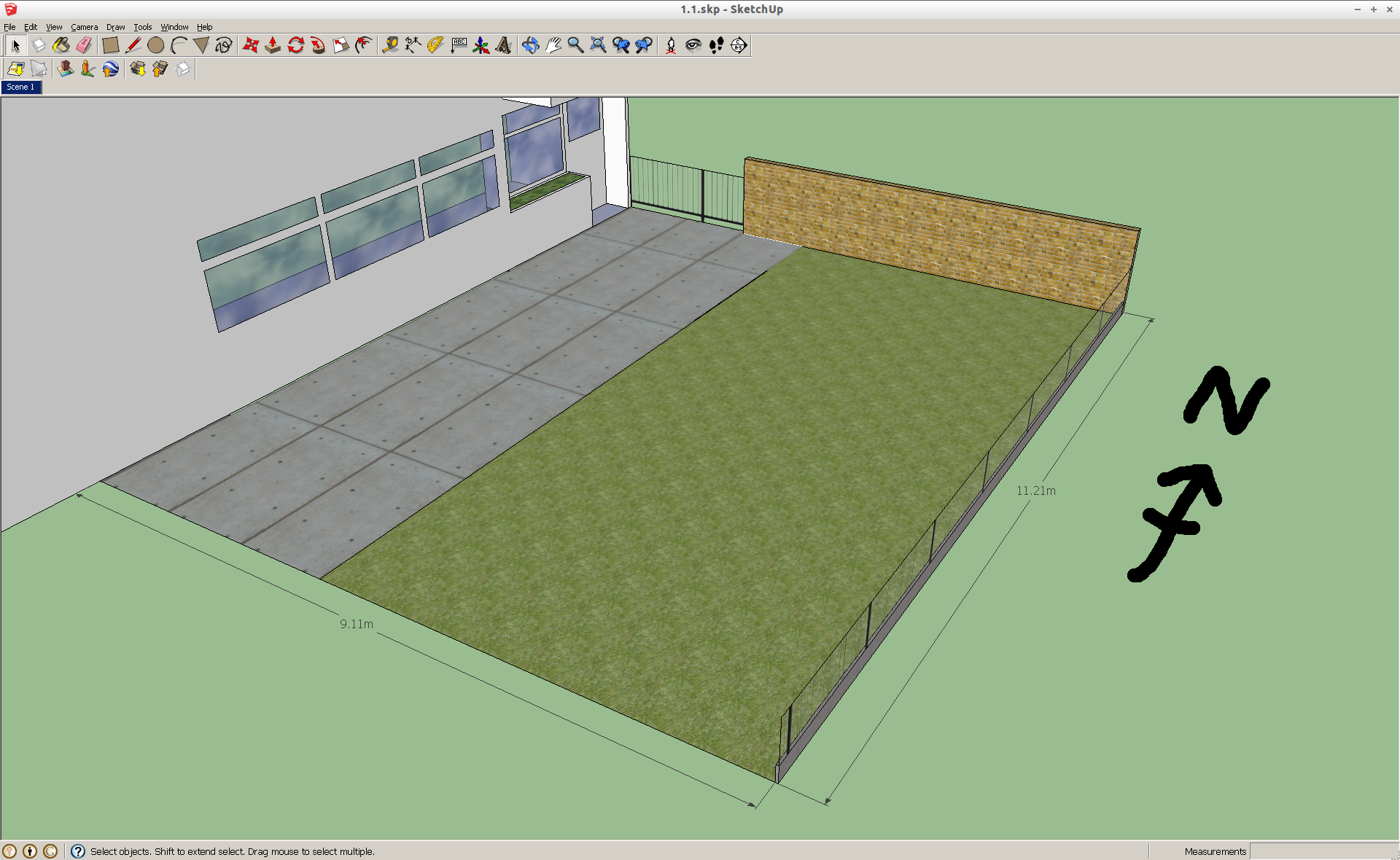
3D basemap created in Google Sketchup Sun & Shade Maps
Sun and shade maps were modelled for each equinox and solstice at four times of day. The key finding: shade falls on the paved (usable) area from just after midday onwards — giving only morning sun for growing.
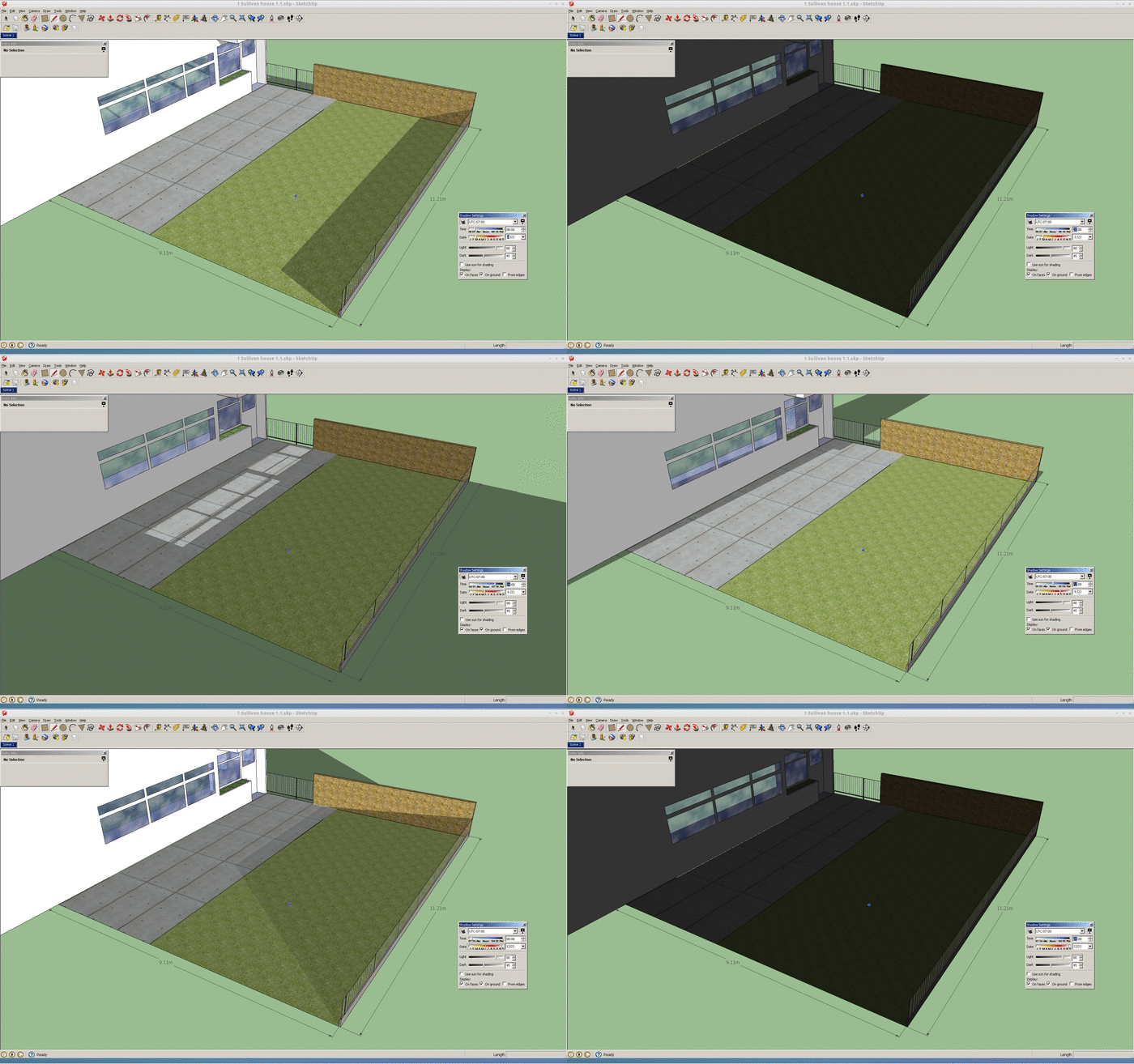
Annual sun and shade animation — note how quickly afternoon shade covers the growing area 
Spring — 8am 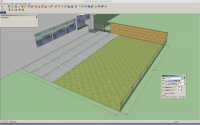
Spring — Midday 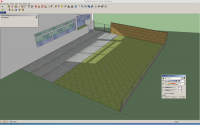
Spring — 4pm (shade arrives) 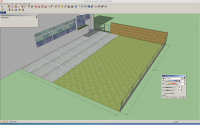
Summer — Midday -
2
Boundaries & Resources
Physical boundaries: No border on the south side (neighbour wanted to build a large fence). Busy road to the north. 8-storey building to the west. Car park to the east. Critically: the lawn area could not be used for growing — only the paved area was available.
Other boundaries: Low food growing knowledge among participants. Exposed site requiring shelter solutions.
Resources: £200 from a charity supporting the garden owner. Seeds and cuttings from my own garden. The owner — in his 80s, a passionate former gardener, happy to contribute knowledge though no longer physically able to garden. Transition Pimlico food group members: no growing skills but genuine desire to learn.
Zones & Sectors
Given the tiny site, zones were simple: immediately outside the back door was zone 1; everything else zone 2. Wind sector analysis confirmed the exposed nature of the site.
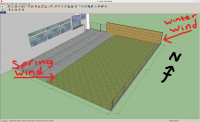
Wind sectors 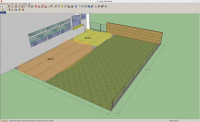
Zone 1 & 2 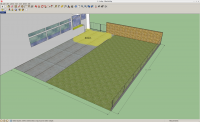
Zones overview -
3
Evaluation — Sun, Half-Day Growing & Constraints
The most significant finding from the evaluation was the half-day sun constraint. With shade arriving from just after midday, plant selection had to focus on species that tolerate or thrive with morning-only sun. This shaped the entire planting plan.
💡 Design Constraint Becomes Design DriverRather than fighting the half-day sun limitation, it was accepted as a design parameter. This is classic permaculture thinking: observe and interact, then design with the pattern you find, not against it. The result is a planting plan suited to the actual conditions. -
4
Design — Garden Layout & Plant Plan

Overall garden design — v0.4 Square Foot Gardening
Given the small space and the need to teach beginners, square foot gardening was used as the production method for the growing beds — clear, measurable, and easily taught.
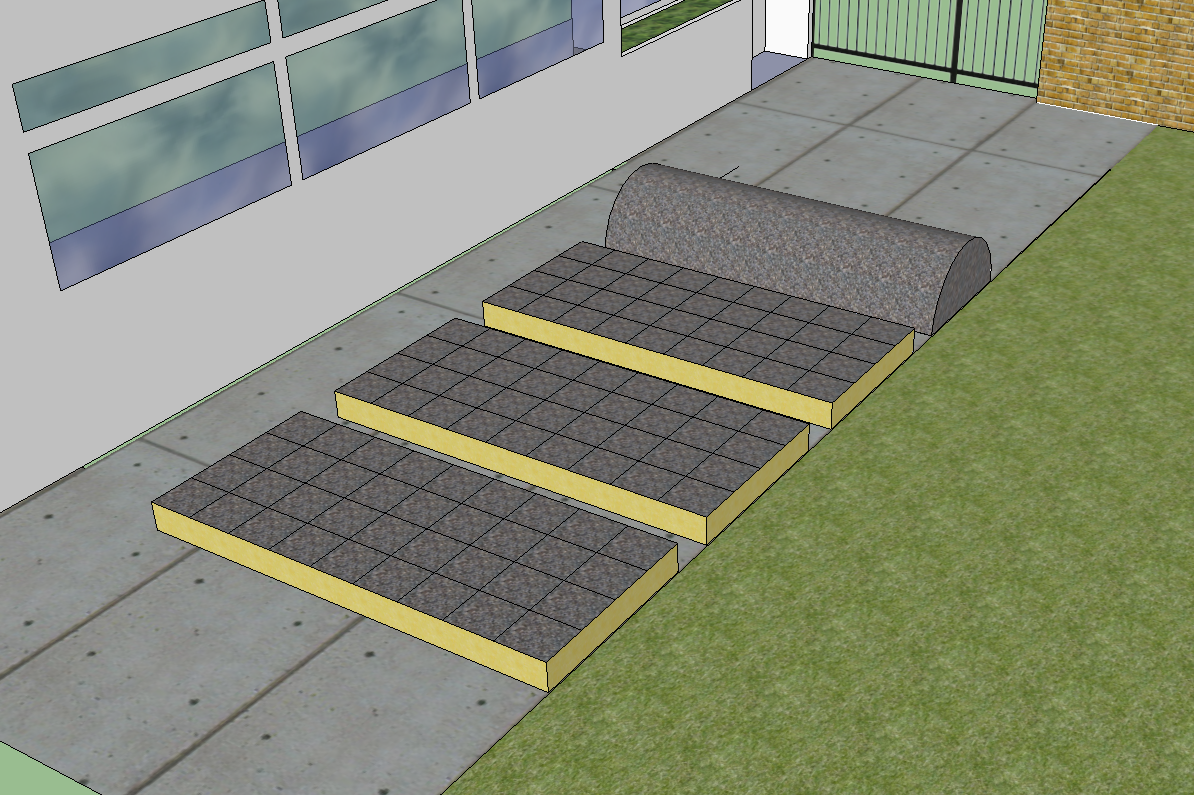
Square foot plot layout 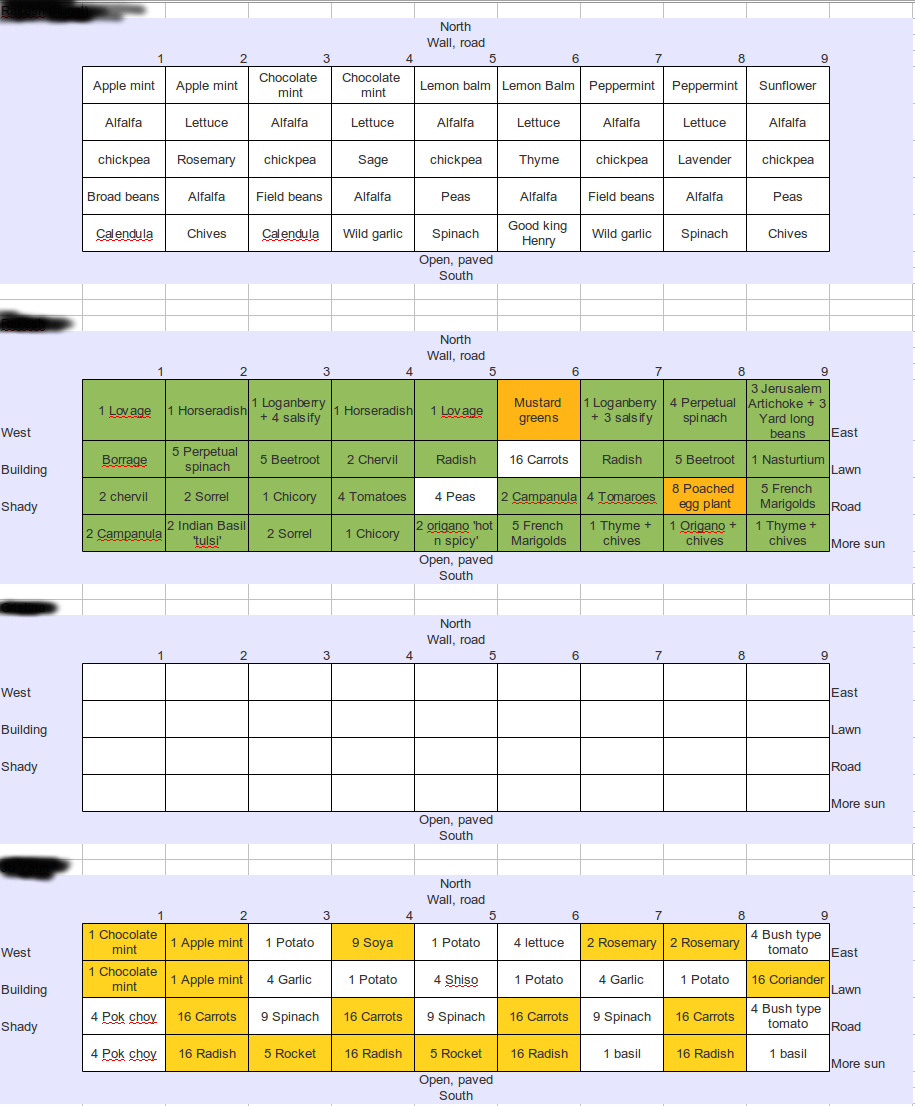
Planting plan for the square foot beds Storage, Seating & Composting
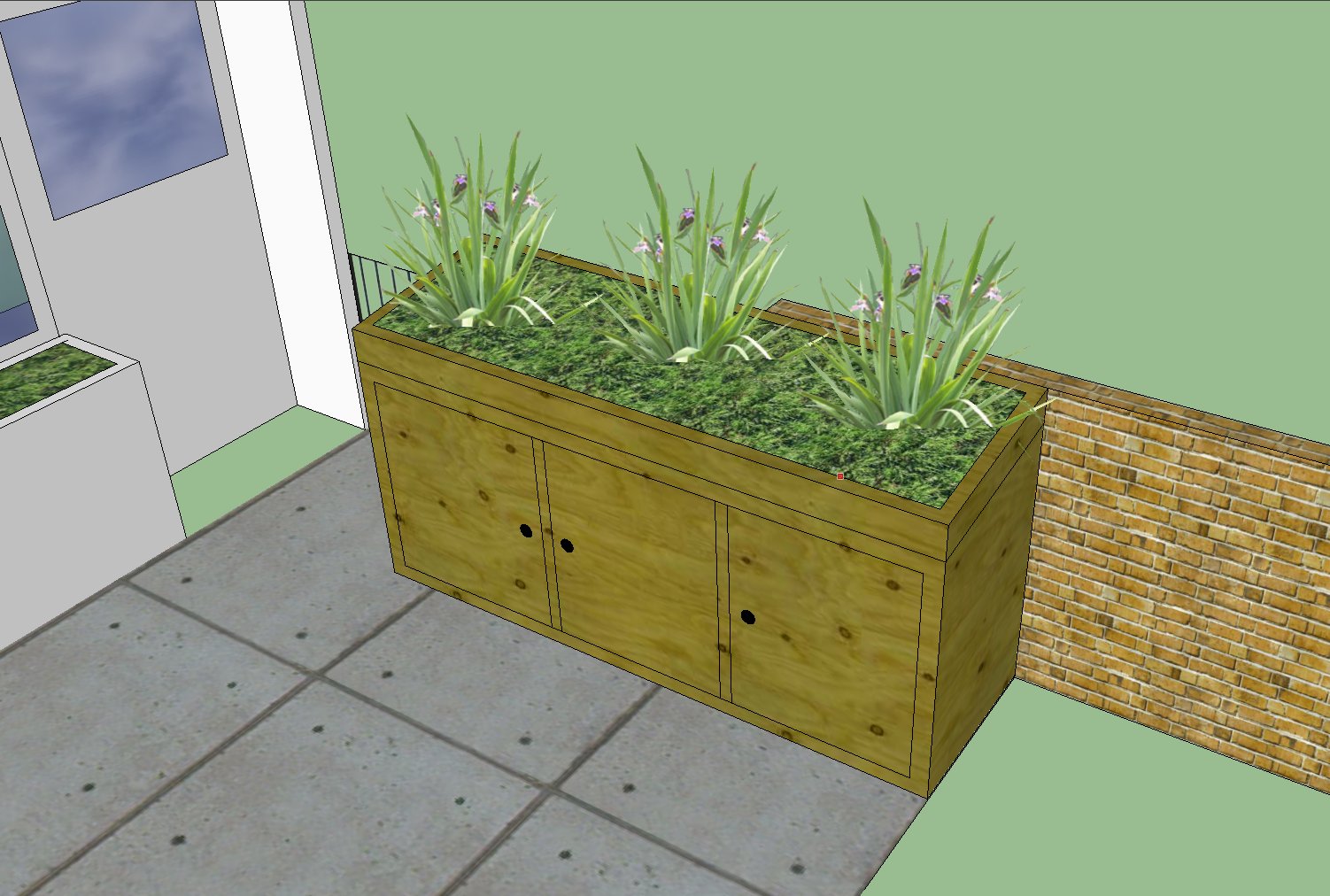
Storage design 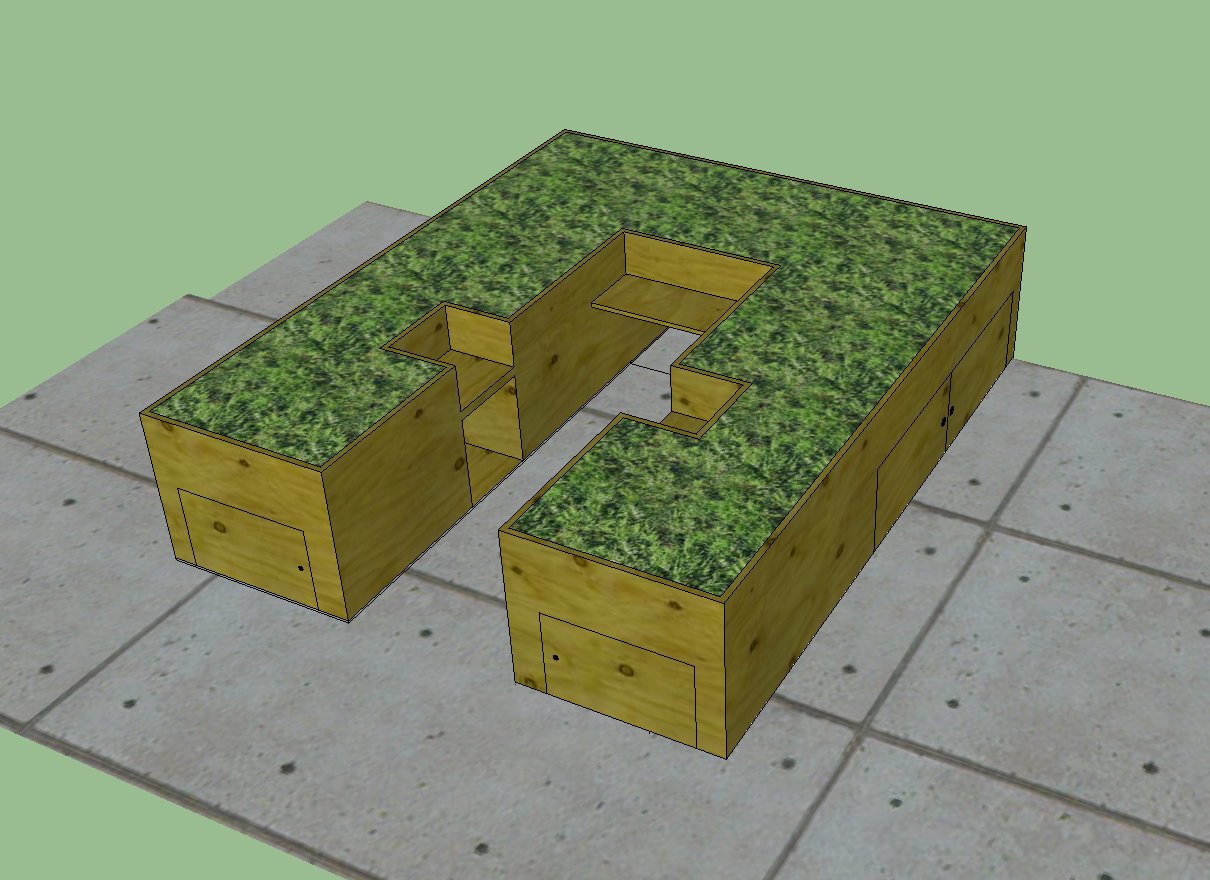
Multifunctional: seating + storage + raised bed 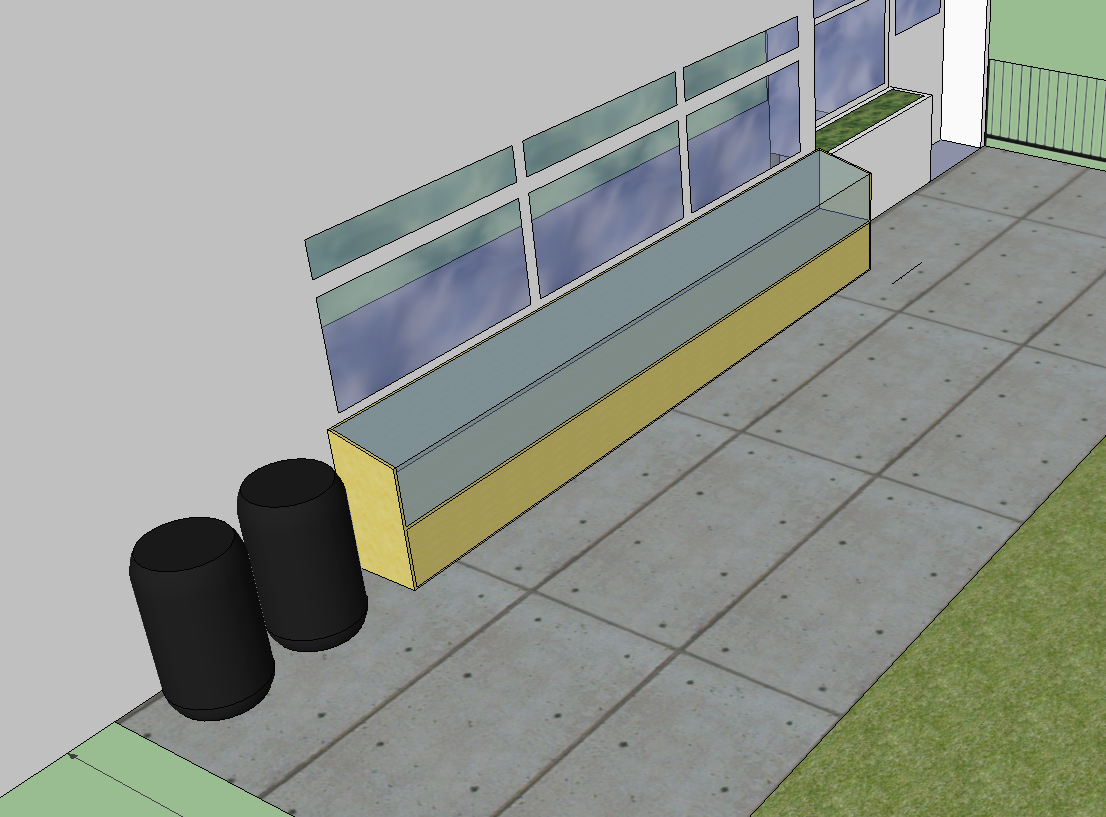
Compost and cloche design 🌿 Design Principle — Each Element Performs Multiple FunctionsThe combined seating/storage/raised-bed unit is a good example of the permaculture principle each element performs many functions. In a small space, multi-functional elements make efficient use of every square metre. -
5
Implementation
Garden taking shape 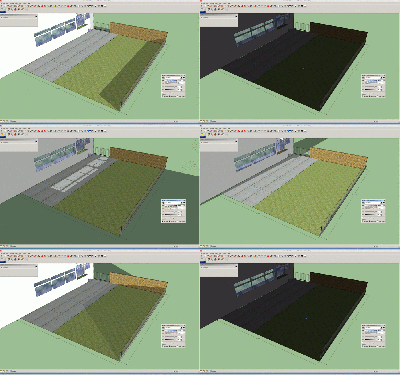
Implementation progress
Reflections & Outcomes
Despite nearly two years of bureaucratic obstruction, the project found a way forward through community relationships rather than institutional channels. The garden was established in a private space, with genuine community participation, on a minimal budget of £200.
Teaching became as important as the physical design — perhaps more so. For participants with no growing experience, the real yield was knowledge and confidence, not just food.
Using OBREDIM for the first time on a real project was also valuable. Its more structured observational opening (compared to SADIM) suited a community context well — taking time to really understand the social and physical environment before rushing to design.
Overview
This design addresses water conservation in a small flat in central London where no plumbing alterations are permitted — the building's plumbing is shared infrastructure and cannot be modified without landlord or management consent.
Rather than viewing this constraint as a barrier, the design explores what is possible within it: how to catch water that is normally wasted and redirect it to appropriate uses. This design is deliberately small in scope, yet its implications reach further than its size might suggest. It demonstrates that permaculture tools and principles can be applied usefully in almost any environment — not just large land-based projects.
Methodology
CEAP would have been the most naturally suited methodology for a design this simple. However, I deliberately chose SADIM to explore how it performs on a small-scale, non-land-based design — and to understand its strengths and limitations beyond the contexts it is usually applied in.
Working Through the Design
-
1
Survey — Where Does Water Go?
The survey mapped every point in the flat where water is used: where it comes from, what quality it arrives at, and what quality it leaves at. This last point is more nuanced than it first appears — water leaving a system is not always greywater. For example, when running a tap to reach the right temperature, the water that runs off before use is still clean drinking water — a significant and often overlooked form of waste.
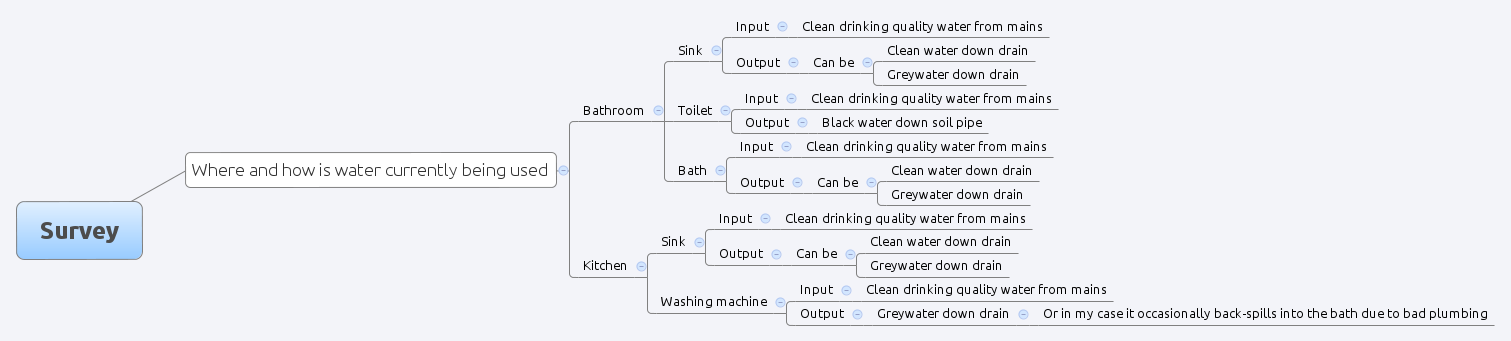
Water survey — mapping all uses and water quality at each point -
2
Analyse — Input/Output Web
With the survey data in hand, I created an input/output web — sometimes called a design web or element card analysis. Every element that outputs clean water was linked to elements that need clean water as input. Every element producing greywater was linked to elements that can accept greywater. This visual mapping immediately clarifies what connections are theoretically possible.
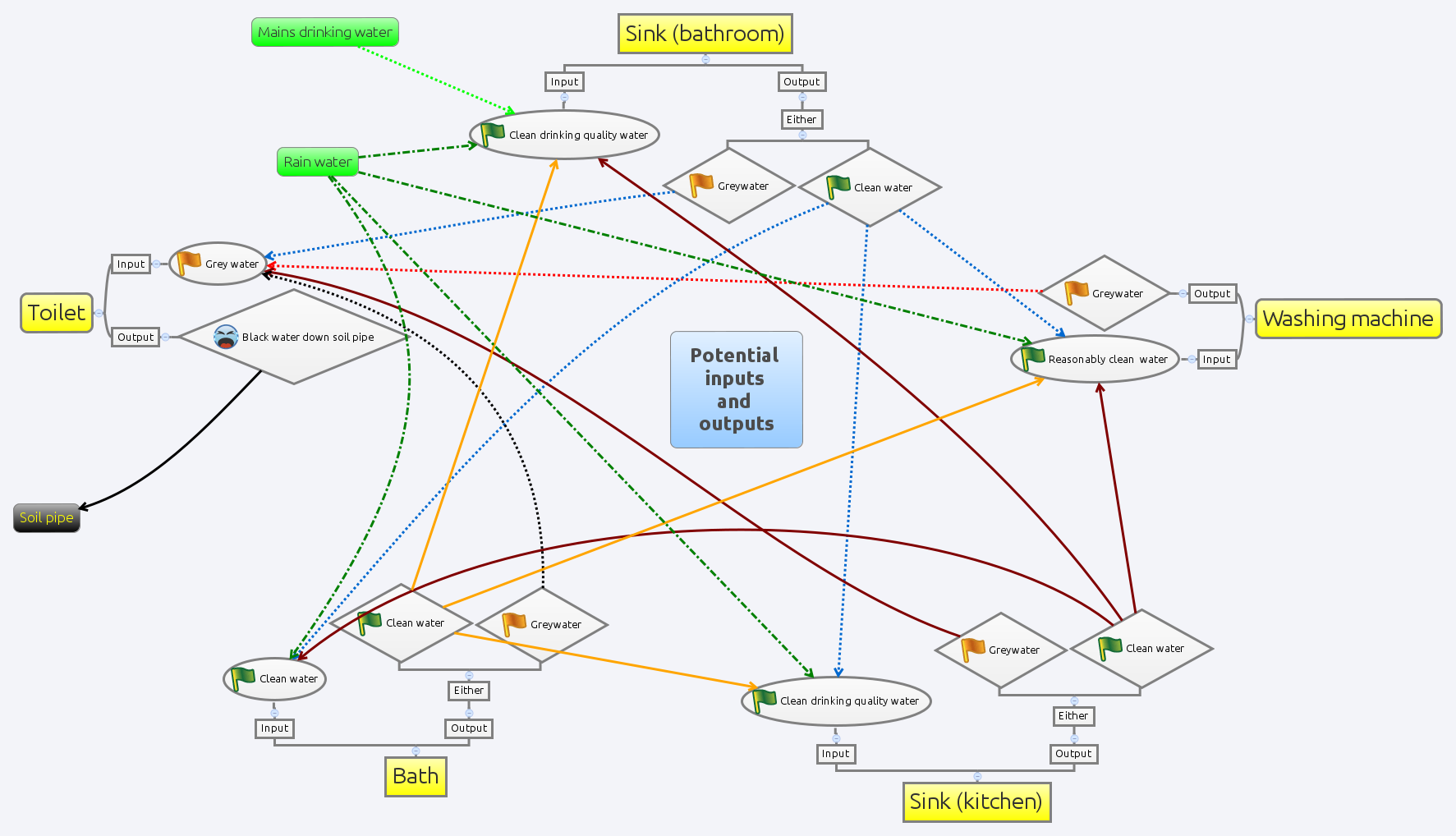
Input/output web — mapping possible connections between water elements Not all theoretically possible connections are practically feasible. A second assessment step evaluated each potential connection for real-world viability.
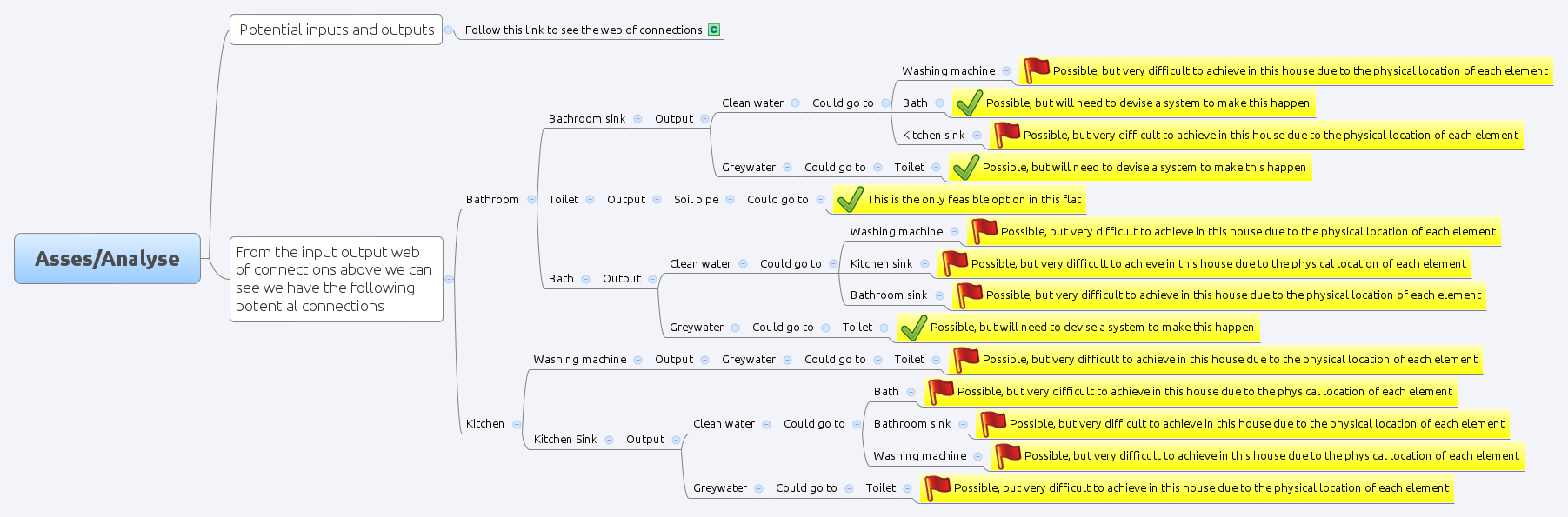
Feasibility assessment of each potential connection 💡 Key Tool — The Input/Output WebThe input/output web (also called a design web or element card analysis) is one of permaculture's most powerful analytical tools. For any system, mapping what each element needs and what it produces reveals hidden opportunities for connection — the outputs of one element becoming the inputs of another, reducing waste and external inputs. -
3
Design — Applying the Principles
Having identified viable connections through the analysis, the design phase ran those connections through the permaculture attitudinal principles. This helped reveal both additional solutions and, equally importantly, which areas were not worth pursuing — allowing focused attention on what was likely to work.
Some solutions may seem obvious in hindsight. The value of the design process here is not that it produces unprecedented ideas, but that it produces clarity: a structured, transparent path to decisions, with the reasoning documented.
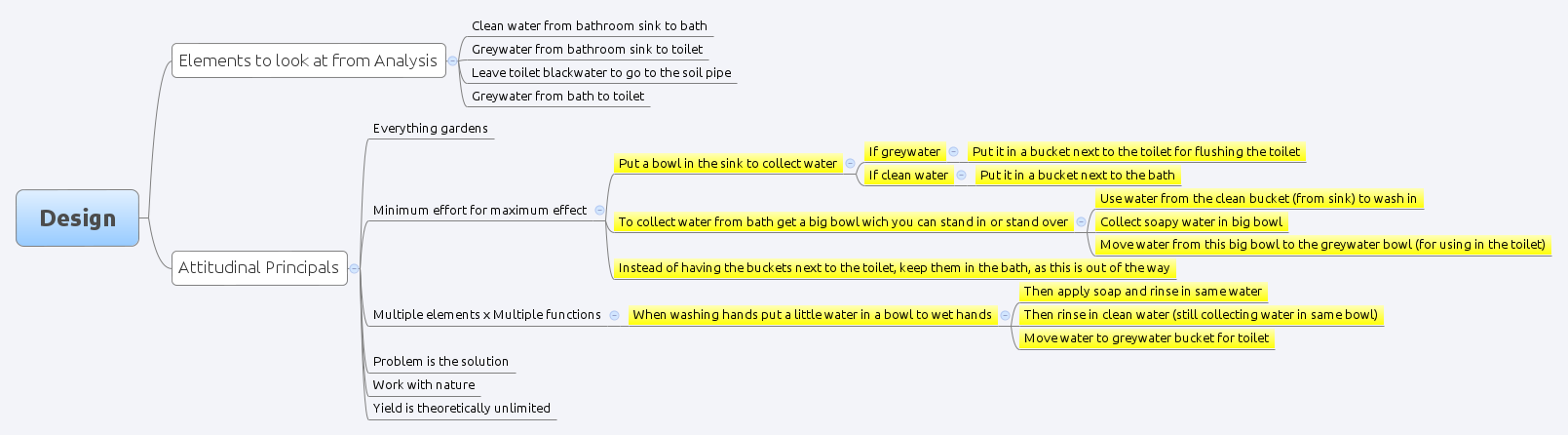
Design mind map — principles applied to viable connections -
4
Implement
Implementation was straightforward and required no detailed plan — the design was simple enough to act on directly.
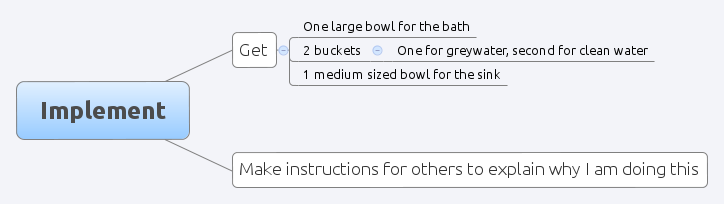
Implementation summary -
5
Manage — Evaluate & Tweak
After implementation, the system was observed and adjusted. As with most designs, a few tweaks were needed to make it function effortlessly day to day.

Management and evaluation notes
Reflections & Outcomes
This small design proved unexpectedly impactful. The input/output analysis rapidly surfaced workable solutions and — just as valuably — eliminated dead ends. The process took far less time than trying to think through the problem intuitively without structure.
The design became so embedded in daily routine that after moving to a new home, the same principles were applied effortlessly. In places where water-saving habits could not be maintained, there was a genuine sense of guilt at the waste. This is permaculture at its most personal: a shift in awareness, made lasting through design.